Working with concrete in challenging environments requires not only efficiency but also safety and precision. One of the main concerns for contractors and construction managers is how to maintain the stability of concrete pumping equipment when operating in slippery areas such as muddy construction sites, rain-affected zones, or regions with icy surfaces. The risk of instability in such conditions can lead to uneven concrete flow, machine tipping, unnecessary delays, and even serious accidents. Ensuring stability is therefore essential for project quality and worker safety. In this article, we will explore practical strategies and considerations for maintaining the safe and efficient operation of both mobile pumps and stationary concrete pump units in slippery conditions.
Understanding the Risks of Slippery Work Areas
Slippery areas can create serious operational challenges for concrete pumping equipment. When surfaces are covered with water, ice, or mud, the ground can lose its load-bearing capacity. This puts additional stress on the stabilizers and outrigger systems of pumps, especially those with long placing booms. A stationary concrete pump, while more stable due to its fixed installation, still requires proper placement and ground preparation to avoid uneven settling or equipment vibration. Beyond machine safety, operators and workers on-site also face risks of slips and falls, which can compound the hazards of heavy equipment operation. Recognizing these risks is the first step in applying effective stability measures.
Choosing the Right Type of Pump for Slippery Conditions
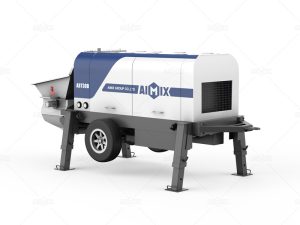
The choice between a mobile pump and a stationary concrete pump can influence stability in a slippery area. Mobile concrete pumps, with their boom arms, require wider outrigger spreads to stabilize during pumping. On slippery or weak ground, this can become problematic without proper reinforcement. On the other hand, a stationary concrete pump is typically anchored on-site and connected to pipelines. Since it does not rely on large outrigger systems, it offers better adaptability when set up on challenging ground. For projects located in areas prone to heavy rain or mud, investing in a stationary option can significantly reduce the risks associated with mobility and machine balancing.
Preparing the Ground for Equipment Stability
Ground preparation is a crucial step in ensuring safe operations. Before placing concrete pumping equipment on-site, contractors should assess soil conditions and drainage. If the ground is soft or waterlogged, stabilizing mats, steel plates, or wooden beams can be placed under the equipment’s base or outriggers. These distribute weight more evenly and prevent sinking or tilting during pumping. In extreme cold regions, where ice formation is a concern, de-icing agents and gravel can be applied to create better traction and support for the machines. Even for a stationary concrete pump, a stable concrete foundation or reinforced platform is necessary to avoid misalignment and vibration that can affect pumping performance.
Using Proper Setup Techniques
Once the ground is prepared, the setup process itself plays a key role in ensuring equipment stability. Outriggers and support arms of mobile pumps should always be extended fully and locked into position, with base pads placed on stable supports. For stationary concrete pump systems, anchoring bolts should be checked and tightened to prevent movement during long-term operation. Operators must also verify that the pump is level before starting, as uneven positioning can affect both safety and concrete flow quality. Regular inspections throughout the working day are equally important, especially if ground conditions worsen due to ongoing rain or heavy traffic.
Operational Safety Practices
Beyond physical setup, safe operation practices can further ensure stability. Operators should avoid overextending booms at maximum reach in slippery areas, as this increases tipping risk. Pumping should be done gradually, avoiding sudden surges of pressure that might destabilize the machine. For stationary systems, pressure monitoring in the pipelines is essential, as excessive back pressure can strain the pump and its foundation. Communication between workers also plays a role—when everyone is aware of potential hazards and equipment movements, the chances of instability-related accidents are significantly reduced.
Maintenance for Long-Term Stability
Regular maintenance of concrete pumping equipment ensures not only performance but also safety in slippery conditions. Hydraulic systems, outriggers, pipelines, and joints should be inspected for wear and leaks. For a stationary concrete pump, checking the anchoring system and foundation stability is essential, especially after heavy use or weather events. Lubrication of moving parts and timely replacement of worn components also reduce the risk of mechanical failures that could lead to instability during operation.
Training and Skilled Operation
Ultimately, equipment stability in slippery areas depends heavily on the skill and knowledge of operators. Training programs should include specific modules on safe pump setup and operation in challenging environments. Operators should understand the limitations of their machines, the impact of ground conditions, and the importance of monitoring during pumping. Skilled operators not only maximize efficiency but also significantly reduce the risk of accidents or equipment instability.
Conclusion
Ensuring the stability of concrete pumping equipment in slippery areas is a multi-step process that combines proper planning, equipment selection, ground preparation, safe setup, and continuous monitoring. While mobile pumps require careful outrigger support and operational caution, a stationary concrete pump offers more reliable stability when properly anchored and maintained. With the right strategies, construction teams can achieve both safety and efficiency, even in the most challenging conditions. By taking preventive measures, investing in proper maintenance, and relying on skilled operators, projects can avoid costly disruptions and maintain smooth progress regardless of environmental challenges.
Leave a Reply