When constructing large-scale infrastructure projects such as airport runways, efficiency and precision are critical. The placement of high volumes of concrete in long, continuous stretches demands reliable machinery that can handle both distance and volume. This is where the stationary concrete pump becomes indispensable. Unlike mobile or truck-mounted models, stationary pumps are specifically designed for projects requiring consistent output over extended periods. However, one of the most important factors influencing efficiency is the size of the pump itself. Whether contractors opt for a large-capacity machine or a small concrete pump, the size decision directly impacts speed, energy use, operational cost, and overall quality of the runway surface.
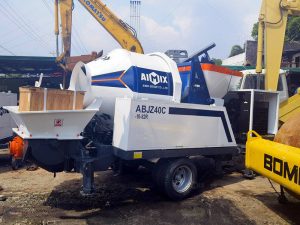
Why Stationary Concrete Pumps are Essential for Airport Runways
Airport runways require durable, uniform slabs of concrete capable of withstanding the heavy loads of aircraft takeoff and landing. Achieving this requires not only the right concrete mix but also precise pumping equipment. A stationary concrete pump is set up at the site and connected with pipelines to deliver concrete across long distances, making it ideal for linear projects like runways. Unlike mobile pumps, it can maintain continuous high-pressure pumping without frequent relocation, ensuring smooth and consistent progress.
Choosing the right size pump matters because runways often span thousands of meters, and the workload involves both long pumping distances and large concrete volumes. Using an undersized machine may lead to delays, while oversizing can create unnecessary energy costs and maintenance burdens.
How Pump Size Influences Pumping Distance and Pressure
The pumping distance in an airport project can be extreme, sometimes requiring concrete to be delivered over 500 meters or more from the batching plant to the placement site. A larger stationary concrete pump has greater horsepower and hydraulic pressure, enabling it to push concrete farther and higher without blockages.
In contrast, a small concrete pump is better suited for shorter distances or secondary applications, such as taxiways or auxiliary structures. While it can handle modest pumping needs, it may struggle to maintain efficiency across the full length of a main runway. If contractors attempt to use a small pump for long distances, the concrete flow rate slows, pressure drops, and the risk of segregation or pipe blockages increases. This inefficiency can lead to downtime and compromises in concrete quality.
Impact of Size on Pumping Volume
Airport runway construction involves massive volumes of concrete placement, often requiring thousands of cubic meters poured continuously. Larger stationary concrete pumps with high-capacity cylinders can deliver greater volumes per hour, sometimes exceeding 100 cubic meters. This capability ensures that concrete can be placed without cold joints or delays, which are detrimental to the strength and smoothness of the runway.
A small concrete pump, with lower output capacity, may deliver only 20–40 cubic meters per hour. While this may be sufficient for residential or small commercial projects, it is typically inadequate for full-scale runway construction. However, small pumps can still be deployed effectively for specialized sections, repairs, or when maneuverability in tight spaces is necessary.
Energy Efficiency and Cost Considerations
It may seem logical to always choose the largest stationary concrete pump available, but energy efficiency is another critical factor. A pump that is too large for the task consumes unnecessary fuel or electricity, increasing operating costs. Oversized equipment also leads to higher wear and tear, raising maintenance expenses.
On the other hand, a small concrete pump may initially appear more cost-effective because of its lower purchase price and reduced energy consumption. Yet, if it struggles to meet project requirements, delays and repeated operations increase labor costs, ultimately offsetting the initial savings. Thus, selecting the right pump size requires balancing the total cost of ownership with the specific demands of the airport runway project.
Quality of Concrete Placement
Concrete placement quality is directly tied to pump performance. A well-sized stationary concrete pump ensures consistent pressure and flow, preventing segregation and maintaining the workability of the concrete mix. This uniformity is essential for achieving smooth, crack-resistant runway surfaces capable of supporting heavy aircraft loads.
By contrast, using a small concrete pump beyond its optimal capacity may result in inconsistent concrete discharge. This can cause uneven compaction, cold joints, or surface irregularities, all of which compromise runway performance and safety. In extreme cases, poor pumping efficiency can lead to rework, wasting both time and resources.
Practical Scenarios of Pump Size Selection
For a major international airport constructing a new main runway, a large stationary concrete pump would be the best choice, ensuring high output and long-distance delivery. This allows continuous concrete placement, minimizing construction time and avoiding weak joints.
For smaller regional airports or for auxiliary structures like taxiways, aprons, or repair works, a small concrete pump may be sufficient. Its compact size makes it easier to operate in confined areas, while its lower cost aligns with the smaller scale of such projects.
Balancing Flexibility and Efficiency
Some contractors even deploy both pump sizes in a complementary manner. For example, a large stationary concrete pump can handle the primary runway pours, while a small concrete pump is positioned nearby for localized work or backup operations. This combination allows flexibility while maximizing efficiency across different construction phases.
Conclusion
In airport runway construction, the size of the stationary concrete pump is a decisive factor that influences pumping distance, output volume, energy efficiency, and the quality of concrete placement. Large pumps provide the horsepower and capacity needed for long, continuous pours, ensuring the durability and safety of runways. Meanwhile, a small concrete pump offers cost savings and flexibility for secondary tasks, though it lacks the output required for main runway projects. Ultimately, contractors must evaluate project scale, distance, and budget to choose the right pump size, ensuring efficiency without sacrificing quality.
By aligning pump size with project requirements, airport runway construction can be completed faster, more economically, and to the highest standards of safety and durability.
Leave a Reply