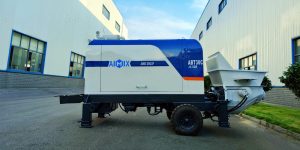
In recent years, many Indonesian contractors and construction companies have chosen to purchase equipment directly from China due to its competitive pricing and reliable product quality. Among the most popular machines is the small portable concrete pump, which has proven to be efficient, durable, and perfectly suited for Indonesia’s growing construction market. However, while the purchase price from Chinese suppliers is often reasonable, the logistics and transportation expenses can significantly affect the total cost of concrete pump acquisition. Managing shipping costs effectively is therefore crucial for maximizing profitability. Understanding how to plan, communicate with suppliers, and choose the right shipping methods can help buyers save a considerable amount when importing a concrete pump from China to Indonesia.
Understanding the Shipping Process
Before identifying cost-saving strategies, it’s essential to understand the key steps involved in international shipment. Shipping a small portable concrete pump typically involves packaging, inland transportation to the Chinese port, export customs clearance, sea freight to Indonesia, import duties, and local transportation to the final destination. Each of these stages contributes to the total cost of concrete pump logistics. While some buyers may delegate all responsibilities to freight forwarders, being involved in the process allows you to identify areas for potential savings.
Choose the Right Shipping Method
The first and most significant factor influencing the overall shipment cost is the transportation method. For most buyers, sea freight remains the most economical option when importing heavy machinery such as a small portable concrete pump. However, within sea freight, there are several options to consider—FCL (Full Container Load) and LCL (Less than Container Load).
If you’re purchasing multiple units or buying other construction equipment at the same time, booking a full container (FCL) can drastically reduce the per-unit cost of concrete pump shipment. On the other hand, if you are only buying one or two units, sharing a container under LCL may be more cost-effective. Nevertheless, buyers should be aware that LCL sometimes involves additional handling fees at both ports, which can slightly increase delivery time. Evaluating the shipment volume, size, and packaging dimensions can help determine the most affordable and practical option.
Optimize Packaging and Loading
Proper packaging not only ensures safety during transportation but can also influence shipping expenses. A small portable concrete pump can be efficiently packed into a container if designed and folded appropriately by the manufacturer. Many Chinese suppliers offer customized packaging options, allowing multiple pumps or spare parts to be loaded in one container to minimize space waste. When negotiating with your supplier, ask them to optimize the pump’s packaging design and provide detailed container loading plans.
For example, if you can fit two concrete pumps in one 20-foot container instead of one, you immediately reduce the shipping cost per unit by half. Additionally, some suppliers use steel frames or wooden crates to secure the pumps, which slightly increases the cost of concrete pump shipment but provides better protection and prevents costly damage claims later. The key is to balance safety with cost-effectiveness by using durable but lightweight materials.
Combine Orders to Get Better Shipping Rates
Another smart way to save costs is by consolidating orders. If you are working on multiple projects or planning future purchases, it’s often more economical to order multiple small portable concrete pump units at once rather than making several smaller shipments. Consolidating purchases allows you to take advantage of bulk discounts from both the manufacturer and the freight forwarder.
Moreover, some suppliers in China cooperate with logistics companies that specialize in exporting construction machinery to Southeast Asia. These companies often have discounted shipping routes between major Chinese ports such as Qingdao, Shanghai, or Guangzhou and Indonesian ports like Jakarta, Surabaya, or Batam. By leveraging these partnerships, you can significantly reduce the cost of concrete pump transportation while ensuring a smooth and timely delivery.

Negotiate Shipping Terms (Incoterms) Wisely
International trade uses Incoterms to define the responsibilities of buyers and sellers during shipping. The most common terms are EXW (Ex Works), FOB (Free on Board), CIF (Cost, Insurance, and Freight), and DDP (Delivered Duty Paid). Choosing the right Incoterm can have a significant impact on the total cost of concrete pump shipment.
For instance, if you have your own trusted freight forwarder, you may opt for EXW or FOB terms, allowing you to control the shipping process and possibly secure lower freight rates. However, if you are new to importing, CIF might be more convenient since the supplier arranges shipping and insurance up to your local port. Before finalizing the deal, compare the total expenses under different terms, and don’t hesitate to ask your supplier for multiple quotes. Sometimes, suppliers get better rates from local carriers and can pass on part of the savings to you.
Plan Shipping During Off-Peak Seasons
Shipping rates fluctuate depending on market demand. Peak seasons—such as before Chinese New Year or during the end-of-year construction rush—often result in higher freight charges and longer delivery times. To minimize the cost of concrete pump logistics, try to plan your purchase during off-peak months when shipping demand is lower. By avoiding high-demand periods, you can not only secure lower rates but also ensure faster delivery and less risk of port congestion.
Work with a Reliable Freight Forwarder
A professional freight forwarder is a valuable partner when importing a small portable concrete pump. They can provide guidance on customs documentation, tariffs, and insurance options. More importantly, an experienced forwarder can help identify the most efficient shipping routes and negotiate competitive rates with carriers. Many freight forwarders specializing in heavy machinery export from China to Indonesia offer door-to-door services, simplifying the entire process and reducing hidden costs that might arise from miscommunication or unexpected delays.
Ensure Proper Documentation and Customs Clearance
Incomplete or incorrect documentation can result in customs delays, fines, and storage fees—all of which increase the cost of concrete pump shipment. Before the pump leaves China, verify that all necessary export documents are prepared, including the bill of lading, packing list, commercial invoice, and certificate of origin. Similarly, ensure compliance with Indonesian import regulations, such as import permits and SNI (Indonesian National Standard) certification when applicable. Working closely with both your supplier and freight forwarder can prevent costly delays and ensure smooth customs clearance.
Compare Insurance Options
While insurance adds a small additional cost, it protects you from significant financial losses if damage occurs during transit. Some buyers skip insurance to save money upfront, but this can backfire if the small portable concrete pump is damaged due to rough handling or sea turbulence. Instead of choosing full-coverage insurance by default, discuss with your supplier and freight agent to find the most appropriate coverage based on the pump’s value and shipment route. Selecting a balanced plan helps reduce the total cost of concrete pump shipment while minimizing financial risk.
Conclusion
In summary, successfully importing a small portable concrete pump from China to Indonesia at a reasonable cost requires strategic planning, smart negotiation, and close cooperation with suppliers and freight partners. By choosing the right shipping method, optimizing packaging, consolidating orders, and planning ahead, you can significantly lower the total cost of concrete pump logistics without compromising safety or quality. Paying attention to Incoterms, seasonal rate changes, and documentation accuracy further ensures that your purchase remains smooth and cost-efficient. With these approaches, contractors and builders in Indonesia can continue to benefit from China’s competitive manufacturing prices while keeping overall import expenses under control—leading to higher profitability and more successful construction projects.
Leave a Reply