Mobile concrete pumps, especially the widely used small mobile concrete pump, have become indispensable equipment in construction projects due to their flexibility and adaptability. For purchasers, concrete pump price is a core concern, and the size of mobile concrete pumps is one of the most critical factors affecting pricing. The size difference of mobile concrete pumps is reflected in multiple aspects such as overall dimensions, boom length (for boom-type mobile pumps), conveying capacity, and power system configuration, which directly affect the production cost, technical difficulty, and application scope of the equipment, thereby forming differences in concrete pump price. Understanding the specific influence of mobile concrete pump size on concrete pump price is crucial for purchasers to select equipment that matches project needs and controls investment costs.
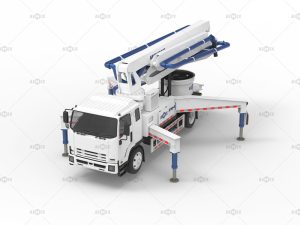
Impact of Overall Dimensions and Structural Materials on Concrete Pump Price
Firstly, the difference in overall dimensions and structural materials caused by the size of mobile concrete pumps directly affects the basic production cost, which is the primary factor determining the gap in concrete pump price. Small mobile concrete pumps are designed with a compact structure to adapt to narrow construction sites such as urban alleyways, rural courtyards, or indoor renovation projects. Their overall dimensions are smaller, requiring less raw materials (such as steel, aluminum alloy) for manufacturing. For example, the main frame of a small mobile concrete pump usually uses a lightweight high-strength steel structure with a smaller volume, and the amount of steel used is 30%-50% less than that of medium and large mobile concrete pumps. In addition, the manufacturing process of small mobile concrete pumps is relatively simple, with lower requirements for precision machining and assembly, which further reduces production costs. Therefore, the concrete pump price of small mobile concrete pumps is generally lower, usually ranging from $20,000 to $80,000. In contrast, medium and large mobile concrete pumps need to meet the requirements of large-volume concrete conveying and long-distance operation, so their overall dimensions are larger, and the frame and structural components need to bear greater pressure. They often use high-grade alloy steel with higher strength and corrosion resistance, and the manufacturing process involves more complex processes such as large-scale welding, precision casting, and dynamic balance testing. These factors lead to a significant increase in production costs, and their concrete pump price can reach $100,000 to $500,000 or even higher.
Impact of Core Functional Parameters (Conveying Capacity, Boom Length) on Concrete Pump Price
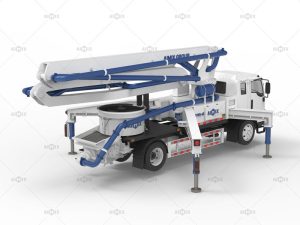
Secondly, the difference in core functional parameters closely related to the size of mobile concrete pumps, such as conveying capacity and boom length, is an important factor affecting concrete pump price. The size of mobile concrete pumps is positively correlated with their conveying capacity: small mobile concrete pumps have a smaller conveying capacity due to their limited internal space and power system, usually with a maximum theoretical conveying capacity of 10-30 cubic meters per hour, which is suitable for small-scale projects with small concrete demand. The core components of these pumps, such as the concrete cylinder, hydraulic pump, and motor, are also small in size and low in power, and the cost of these components accounts for a lower proportion of the total production cost. Therefore, their concrete pump price is more competitive. For example, a small mobile concrete pump with a conveying capacity of 20 cubic meters per hour has a concrete pump price that is about 40%-60% lower than that of a medium-sized mobile concrete pump with a conveying capacity of 50 cubic meters per hour. For boom-type mobile concrete pumps, boom length is a key indicator of size. Small mobile concrete pumps usually have a boom length of less than 25 meters, while medium and large ones can reach 30-60 meters or more. The longer the boom, the higher the technical requirements for material selection, structural design, and hydraulic control system. The boom of a large mobile concrete pump needs to be made of high-strength lightweight alloy, and the hydraulic system needs to have precise control capabilities to ensure the stability and flexibility of the boom operation. These high-tech components significantly increase the cost, leading to a substantial rise in concrete pump price. Taking a 20-meter boom small mobile concrete pump and a 45-meter boom medium-sized mobile concrete pump as examples, the latter’s concrete pump price is nearly twice that of the former.
Impact of Power System Configuration Differences on Concrete Pump Price
Thirdly, the difference in power system configuration caused by the size of mobile concrete pumps also has a significant impact on concrete pump price. Small mobile concrete pumps are usually equipped with small-power diesel engines or electric motors to meet their basic operation needs. These small-power power systems have mature technology, low production costs, and are widely sourced, which helps control the overall concrete pump price. For example, the diesel engine used in a small mobile concrete pump usually has a rated power of 30-80 kilowatts, and the cost of this engine is only about $3,000-$8,000. In contrast, medium and large mobile concrete pumps require high-power power systems to drive large-capacity conveying mechanisms and long booms. Their diesel engines or electric motors have a rated power of 100-300 kilowatts or more, and these high-power power systems often use well-known international brands (such as Cummins, Deutz) to ensure reliability and durability. The cost of a single high-power diesel engine can reach $20,000-$50,000, which accounts for a large proportion of the total production cost. In addition, large mobile concrete pumps are often equipped with more complex auxiliary systems such as cooling systems, noise reduction systems, and intelligent control systems to ensure stable operation under high-load conditions. These auxiliary systems further increase the equipment cost, making the concrete pump price of medium and large mobile concrete pumps much higher than that of small mobile concrete pumps.
Indirect Impact of Application Scope and Market Demand on Concrete Pump Price
Furthermore, the difference in application scope and market demand corresponding to the size of mobile concrete pumps also indirectly affects the pricing strategy of concrete pump price. Small mobile concrete pumps have a wide range of applications, covering small-scale construction projects such as rural housing construction, urban road maintenance, indoor decoration, and small bridge construction. The market demand is large, and manufacturers often adopt a volume-based pricing strategy to reduce the unit price and increase market share. Therefore, the concrete pump price of small mobile concrete pumps is more market-oriented and competitive. In contrast, medium and large mobile concrete pumps are mainly used in large-scale infrastructure projects such as high-rise buildings, long-span bridges, and urban rail transit. The market demand is relatively small, and the requirements for product quality, performance, and after-sales service are higher. Manufacturers need to invest more in research and development, production, and service to meet the needs of these projects. Therefore, the pricing of medium and large mobile concrete pumps is often higher, and the profit margin is relatively larger. In addition, the after-sales service cost of large mobile concrete pumps is also higher, including on-site installation, debugging, technical training, and spare parts supply. These costs are often included in the concrete pump price, further widening the price gap between medium and large mobile concrete pumps and small mobile concrete pumps.
Other Factors Affecting Concrete Pump Price and Purchasing Suggestions
It should be noted that although the size of mobile concrete pumps is a key factor affecting concrete pump price, other factors such as brand, configuration, and after-sales service will also have an impact. For example, the concrete pump price of a small mobile concrete pump from a well-known international brand may be higher than that of an ordinary brand’s medium-sized mobile concrete pump. However, in general, the size of mobile concrete pumps determines the basic cost and application positioning of the equipment, and thus has a decisive impact on the overall trend of concrete pump price. For purchasers, when selecting mobile concrete pumps, they should not only focus on concrete pump price but also comprehensively consider the project’s actual needs such as construction scale, site conditions, and concrete demand, so as to select the appropriate size of mobile concrete pump and achieve the best balance between cost and efficiency.
In summary, the size of mobile concrete pumps influences concrete pump price through multiple channels such as production cost, functional parameters, power configuration, and market demand. Small mobile concrete pumps have the advantage of low concrete pump price due to their small size, simple structure, and low power configuration, which are suitable for small-scale projects. Medium and large mobile concrete pumps have higher concrete pump price due to higher production costs and more complex configurations, which are suitable for large-scale projects with high requirements. Understanding this influence mechanism can help purchasers make more rational purchasing decisions, select equipment that matches their own needs, and effectively control project investment costs.
Leave a Reply