Transferring construction equipment between job sites is a routine task, but it requires careful planning to ensure safety, efficiency, and compliance with regulations. When the distance between sites is relatively short, such as 5 km, many contractors assume the process is simple. In reality, moving a trailer mounted concrete pump still involves multiple technical and operational considerations. This is especially true when the equipment is classified as a concrete pump small portable unit, as its apparent mobility does not eliminate the need for proper preparation. Understanding the correct transfer process helps reduce downtime, prevent equipment damage, and maintain project schedules.
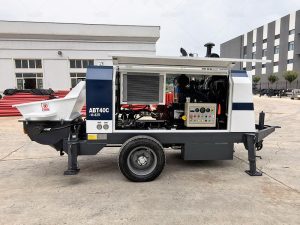
Understanding the Characteristics of a Trailer Mounted Concrete Pump
Before organizing the transfer, it is important to understand the structural and functional characteristics of a trailer mounted concrete pump. This type of pump integrates a pumping system, hopper, hydraulic unit, and control system onto a towable chassis. Unlike truck-mounted pumps, it does not have self-driving capability and relies on an external towing vehicle. Even when marketed as a concrete pump small portable, its actual weight, center of gravity, and towing requirements must be accurately assessed.
Most trailer mounted concrete pumps are designed for frequent relocation within construction zones, which makes them suitable for short-distance transfers. However, improper handling during towing can lead to mechanical stress, misalignment of components, or even road safety hazards. Therefore, preparation is a critical first step.
Pre-Transfer Inspection and Preparation
A thorough inspection should be conducted before moving the equipment. This inspection focuses on mechanical integrity, safety devices, and cleanliness. First, the pumping system should be fully cleaned to remove residual concrete from the hopper, pipelines, and pumping cylinders. Hardened concrete inside the system not only adds unnecessary weight but also increases the risk of imbalance and component damage during transport.
Next, inspect the tires, wheel bearings, braking system, and towing eye. Tire pressure should meet manufacturer specifications, as underinflated or overinflated tires can compromise stability during towing. The braking system, especially for larger trailer mounted concrete pump models, must function properly to ensure safe deceleration. Electrical connections for brake lights and indicators should also be checked if the unit will be transported on public roads.
Selecting the Appropriate Towing Method
For a 5 km transfer, towing is generally the most efficient method, provided road conditions and local regulations allow it. The towing vehicle must have sufficient rated towing capacity to handle the weight of the trailer mounted concrete pump. Using an undersized towing vehicle increases the risk of loss of control, excessive wear on the drivetrain, and braking inefficiency.
When dealing with a concrete pump small portable model, some contractors may consider using a light-duty truck or tractor. While this is often acceptable, the towing vehicle should still be equipped with appropriate hitching systems and safety chains. Proper coupling between the pump and the towing vehicle is essential to prevent detachment during movement.
Route Planning and Traffic Considerations
Even over a distance of 5 km, route planning should not be overlooked. The selected route should minimize sharp turns, steep slopes, narrow roads, and areas with heavy traffic. Smooth and relatively flat roads reduce mechanical stress on the trailer and improve towing stability.
Local traffic regulations may impose restrictions on towing speed, equipment width, or operating hours. It is advisable to confirm whether permits are required, particularly if the trailer mounted concrete pump exceeds standard road dimensions. Planning the transfer during off-peak hours can further reduce risks and improve efficiency.
Securing Components and Accessories
During transfer, all movable or detachable components must be properly secured. This includes delivery pipelines, hoses, remote control units, and auxiliary tools. Loose components can shift during movement, leading to damage or safety hazards.
The outriggers should be fully retracted and locked in position. Control panels should be protected from vibration and dust exposure. Even though a concrete pump small portable unit is designed for mobility, vibration during towing can still affect sensitive hydraulic and electronic components if they are not properly secured.
On-Road Safety Measures
Safety is a primary concern when transferring heavy equipment. The towing speed should remain within recommended limits, typically lower than standard vehicle speeds. Sudden acceleration, sharp braking, and aggressive steering should be avoided to maintain stability.
Warning signs, reflective markings, and lighting should be clearly visible to other road users. If required by local regulations, escort vehicles or additional warning signals may be used, especially when transferring equipment through urban or congested areas.
Arrival and Post-Transfer Inspection
Once the trailer mounted concrete pump arrives at the new site, the transfer process is not yet complete. A post-transfer inspection is necessary to ensure that no damage occurred during transportation. Check the chassis, tires, hydraulic connections, and control systems for signs of leakage, looseness, or misalignment.
Before resuming operation, conduct a brief functional test. This includes starting the power system, checking hydraulic pressure, and ensuring smooth operation of the pumping mechanism. For a concrete pump small portable unit, this step is particularly important because minor transport-induced issues can directly affect pumping efficiency and safety on site.
Managing Downtime and Operational Efficiency
One advantage of transferring a trailer mounted concrete pump over a short distance is the potential for minimal downtime. With proper planning, the entire transfer can often be completed within a few hours. Coordinating the transfer schedule with site activities ensures that the pump can be put back into service quickly, maintaining project continuity.
Clear communication between site managers, operators, and transport personnel helps avoid delays and misunderstandings. Assigning responsibility for inspection, towing, and setup ensures accountability and reduces the risk of procedural errors.
Conclusion
Transferring a trailer mounted concrete pump over a 5 km distance may appear straightforward, but it requires a structured and disciplined approach. From pre-transfer inspection and towing vehicle selection to route planning and post-transfer checks, each step plays a role in ensuring safety and efficiency. Even when handling a concrete pump small portable model, contractors should follow standardized procedures rather than relying on assumptions about ease of movement. By treating short-distance transfers with the same level of professionalism as long-distance transport, construction teams can protect their equipment investment, reduce operational risks, and maintain reliable project progress.
Leave a Reply