Portable concrete pumps are widely used in small and medium-sized construction projects, road maintenance, and rural infrastructure construction due to their flexibility, small size, and easy mobility. However, during transportation from the warehouse of concrete pumps suppliers to construction sites, portable concrete pumps are often exposed to complex road conditions, vibration, jolting, and external impacts, which may cause damage to components, pipeline loosening, or performance failures, posing potential safety hazards for subsequent on-site operation. To ensure the integrity and operational safety of portable concrete pumps during transportation, concrete pumps suppliers have developed a series of standardized and systematic safety guarantee methods. These methods cover pre-transport preparation, packaging and fixing, transportation process monitoring, and post-transport inspection, forming a full-link safety management system.
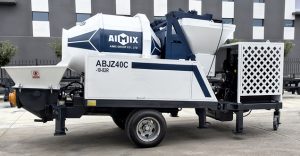
Pre-Transport Component Inspection and Functional Testing
Concrete pumps suppliers regard pre-transport inspection and functional testing as the first line of defense to ensure the transportation safety of portable concrete pumps. Before the equipment leaves the factory or warehouse, professional technicians will conduct a comprehensive inspection of each component of the portable concrete pump to eliminate potential safety hazards from the source. Firstly, the core working components are carefully checked, including the pump body, hydraulic system, electrical system, and conveying pipeline. For the pump body, technicians will confirm that the main engine, mixing device, and feeding mechanism are intact, with no loose fasteners or structural damage. The hydraulic system, which is the power core of the portable concrete pump, will be inspected for pipeline cracks, oil leakage, and sufficient hydraulic oil level; the pressure gauge and safety valve will be calibrated to ensure they can accurately display pressure and automatically release pressure when overloaded. The electrical system, including the control panel, wires, and connectors, will be checked for insulation damage, loose connections, or short-circuit risks, and the emergency stop function will be tested to ensure it is sensitive and effective. Secondly, a full set of functional tests will be carried out on the portable concrete pump. Technicians will start the equipment to test the operation of the pump body, the flexibility of the folding boom (if equipped), and the smoothness of the concrete conveying process. This test not only verifies the normal operation of the equipment but also checks whether each component can withstand the vibration and impact that may occur during transportation. For example, if the test finds that the conveying pipeline is loose, it will be reinforced immediately; if the hydraulic system has abnormal noise, the root cause will be identified and repaired. In addition, concrete pumps suppliers will sort out the inspection and test records in detail, attach them to the equipment delivery document, and ensure that only the portable concrete pumps that pass all inspections and tests are allowed to be transported.
Standardized Packaging and Fixed Installation for Transportation
Reasonable packaging and firm fixing are crucial to preventing the portable concrete pump from being damaged during transportation, and concrete pumps suppliers have formulated strict packaging and fixing standards based on the structural characteristics of the equipment. Firstly, targeted packaging measures are adopted for vulnerable components of the portable concrete pump. The conveying pipeline, which is easy to be bent and damaged, will be wrapped with high-strength foam or rubber sleeves to avoid collision and friction during transportation; the control panel and electrical connectors will be covered with waterproof and dustproof plastic covers to prevent moisture, dust, and external impacts. For the pump body, a protective film will be wrapped on the surface to prevent scratches and corrosion, and wooden or steel protective frames will be installed around the key parts (such as the pump outlet and mixing device) to enhance impact resistance. Secondly, the portable concrete pump will be firmly fixed on the transport vehicle to avoid displacement, collision, or rollover during transportation. Concrete pumps suppliers usually use high-strength steel wire ropes, fixing bolts, and anti-slip pads to fix the equipment. The fixing points are selected according to the center of gravity of the portable concrete pump to ensure that the force is even and the fixation is firm. For example, the chassis of the portable concrete pump will be fixed to the transport vehicle’s cargo bed through multiple bolts, and steel wire ropes will be used to pull and fix the boom and pump body to prevent them from shaking during transportation. In addition, for long-distance transportation or transportation in areas with complex road conditions, concrete pumps suppliers will add additional fixing measures, such as installing anti-vibration pads between the equipment and the cargo bed to reduce the impact of road vibration on the portable concrete pump. Before the transport vehicle departs, technicians from the supplier will check the fixing status of the equipment again, confirm that there is no looseness, and sign the fixing inspection form to ensure that the packaging and fixing meet the transportation safety requirements.
Selection of Professional Transport Teams and Route Planning
The selection of transport teams and rational route planning are important links for concrete pumps suppliers to ensure the transportation safety of portable concrete pumps, as unprofessional transport operations or unreasonable routes will greatly increase the risk of equipment damage. Firstly, concrete pumps suppliers will cooperate with professional transport teams with rich experience in engineering equipment transportation. These teams have qualified transport vehicles (such as flatbed trucks, low-bed trucks) that meet the load and size requirements of the portable concrete pump, and the drivers have professional training and rich driving experience in transporting large-scale engineering equipment. Before cooperation, the supplier will review the transport team’s qualification certificates, vehicle inspection reports, and driver’s licenses to ensure that they meet the relevant national regulations and transportation safety standards. In addition, the supplier will sign a detailed transport contract with the transport team, clarifying the safety responsibilities of both parties, such as the transport team’s obligation to ensure the safety of the equipment during transportation, and the liability for compensation in case of equipment damage due to improper operation. Secondly, concrete pumps suppliers will carry out rational route planning before transportation. The planning team will comprehensively consider factors such as road conditions, traffic restrictions, and weather conditions to select the safest and most efficient transport route. For example, they will avoid roads with potholes, steep slopes, or narrow passages that may cause severe jolting or collision of the transport vehicle; they will check the weather forecast in advance and avoid transporting the portable concrete pump in severe weather such as heavy rain, strong wind, or heavy snow. During transportation, the transport team will keep in close contact with the supplier’s logistics management personnel, report the transport progress and road conditions in real time, and deal with unexpected situations (such as road construction, traffic accidents) in a timely manner under the guidance of the supplier. If the transport route needs to be changed temporarily, the transport team must obtain the supplier’s consent and reconfirm the safety of the new route before proceeding.
Real-Time Monitoring and Emergency Handling During Transportation
To effectively control the transportation process and deal with potential risks in a timely manner, concrete pumps suppliers have established a real-time monitoring and emergency handling mechanism for the transportation of portable concrete pumps. Firstly, advanced monitoring equipment is installed on the transport vehicles to monitor the transportation status of the portable concrete pump in real time. These monitoring equipment include GPS locators, vibration sensors, and video cameras. The GPS locator can track the real-time position and driving speed of the transport vehicle, ensuring that the vehicle is driving according to the planned route and speed limit requirements; the vibration sensor can monitor the vibration intensity during transportation, and if the vibration exceeds the safe range, it will send an alarm to the supplier’s logistics management platform immediately; the video camera can real-time record the fixing status of the equipment and the surrounding environment of the transport vehicle, facilitating the supplier to check the transportation situation at any time. Secondly, concrete pumps suppliers have set up a special emergency response team to deal with unexpected situations during transportation. The team is composed of professional technicians and logistics personnel who are on call 24 hours a day. If the transport team encounters problems such as equipment looseness, component damage, or vehicle breakdown during transportation, they can contact the emergency response team immediately. The emergency response team will guide the transport team to take preliminary handling measures through telephone or video, such as reinforcing the equipment, replacing damaged parts (if spare parts are available), or arranging for rescue vehicles to arrive at the scene. For example, if the conveying pipeline of the portable concrete pump is damaged during transportation, the emergency response team will instruct the transport team to stop the vehicle immediately, use the spare pipeline carried by the supplier to replace it, and check the fixing status of other components before continuing transportation. In addition, the supplier will summarize and analyze each emergency handling case to optimize the transportation safety management system and reduce the occurrence of similar incidents.
Post-Transport Inspection and Commissioning Before Delivery
After the portable concrete pump arrives at the destination, concrete pumps suppliers will conduct a comprehensive post-transport inspection and commissioning to ensure that the equipment is in a safe and usable state before delivering it to the customer. Firstly, the appearance and fixing status of the equipment are inspected. Technicians will check whether the packaging of the portable concrete pump is intact, whether the protective film and protective frame are damaged, and whether the fixing bolts and steel wire ropes are loose or deformed. They will also check each component of the equipment in detail, including the pump body, conveying pipeline, hydraulic system, and electrical system, to confirm that there is no damage, leakage, or loose connection caused by transportation. Secondly, functional commissioning is carried out on the portable concrete pump. The commissioning process is the same as the pre-transport functional test, including starting the equipment to test the operation of the pump body, the flexibility of the boom, and the smoothness of the conveying process. Technicians will also calibrate the pressure gauge, safety valve, and other instruments again to ensure their accuracy. If any problems are found during the inspection and commissioning, such as loose components or abnormal operation, the supplier will repair and adjust them immediately until the equipment meets the safety operation requirements. Finally, concrete pumps suppliers will organize the customer to conduct on-site acceptance of the portable concrete pump. The customer will check the equipment according to the inspection and commissioning records provided by the supplier, and confirm that the equipment is intact and meets the contract requirements. Only after the customer signs the acceptance document will the supplier complete the delivery of the equipment. In addition, the supplier will provide the customer with detailed transportation safety notes and operation guidelines, reminding the customer to pay attention to the safety of the equipment during subsequent on-site transfer and use.
In conclusion, ensuring the transportation safety of portable concrete pumps is a core responsibility of concrete pumps suppliers, which requires the joint cooperation of multiple links such as pre-transport inspection, standardized packaging and fixing, rational route planning, real-time monitoring, and post-transport commissioning. By implementing these scientific and strict safety guarantee methods, concrete pumps suppliers can effectively reduce the risk of equipment damage during transportation, ensure that the portable concrete pump is delivered to the customer in a safe and intact state, and lay a solid foundation for the safe operation of the equipment on the construction site. At the same time, these methods also reflect the professionalism and responsibility of concrete pumps suppliers, helping to enhance customer trust and promote the healthy development of the concrete pump industry.
Leave a Reply