Blog

  • Understanding and Resolving Blockages in Small Concrete Pump Equipment During Operation

    The operational efficiency of small concrete pumps is fundamentally challenged by the occurrence of pipeline blockages, an issue that can halt productivity, increase labor costs, and potentially damage the concrete pump equipment if not addressed promptly and correctly. A blockage within the system of a small concrete pump represents more than a simple mechanical failure; it is typically a symptom of an underlying issue related to concrete mix design, operational practice, equipment setup, or environmental conditions. For operators and project managers relying on this versatile concrete pump equipment, developing a systematic understanding of blockage causes, prevention strategies, and safe resolution techniques is paramount to maintaining project timelines and ensuring the economic viability of using this technology. Unlike larger, industrial-grade systems with more robust tolerances, small concrete pumps operate with narrower pipeline diameters and often in more variable on-site conditions, making them particularly susceptible to material flow interruptions. This comprehensive guide will detail the procedural methodology for diagnosing, clearing, and preventing blockages, emphasizing a safety-first approach that protects both personnel and the integrity of the concrete pump equipment. The goal is to transform a reactive panic into a calm, procedural response, ensuring minimal downtime and maximizing the reliable performance that makes small concrete pumps indispensable for a wide array of construction projects.
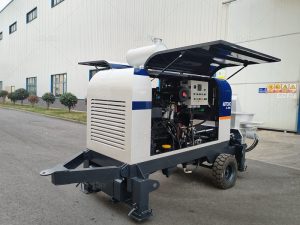
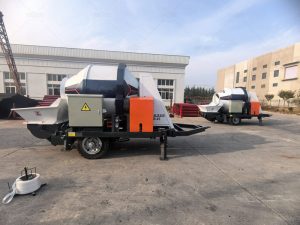
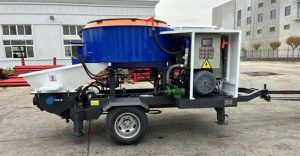
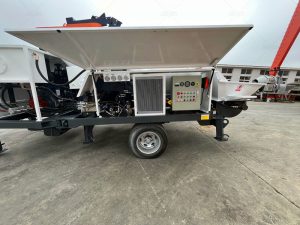
    trailer concrete pump went through test in factory before shipment

    Proactive Prevention Through Mix Design and Machine Setup

    The most effective strategy for fixing a blockage is to prevent it from occurring in the first place, which begins long before the concrete pump equipment is started on the job site. The concrete mix design is the single most critical factor influencing flowability. A mix intended for pumping must have adequate workability, typically achieved with a proper water-cement ratio and the inclusion of additives like superplasticizers, which reduce friction without compromising strength. The aggregate gradation is equally vital; poorly graded concrete with an excess of large, angular aggregate or a deficiency of fine material (fines) will separate under pressure, causing the paste to lubricate the pipe while the aggregate locks together to form a plug. Before commencing any pour with small concrete pumps, it is essential to verify that the delivered mix meets pumping specifications, often requiring a slump test to ensure consistency. Concurrently, the physical setup of the concrete pump equipment plays a foundational role in prevention. The pipeline must be installed with as few sharp bends as possible, and all connections must be perfectly aligned and securely tightened to prevent any internal misalignment that creates a friction point. For longer horizontal runs, properly supporting the pipeline to prevent sagging or movement is crucial, as any deviation can cause material to settle. Furthermore, the initial lubrication of the pipeline, known as “priming” or “wetting,” is a non-negotiable step. This involves pumping a slurry of cement, sand, and water or a commercially available pumping aid through the system before introducing the structural concrete. This slurry coats the pipe walls, drastically reducing the initial friction and creating a smooth path for the concrete column to follow, significantly lowering the risk of an early blockage in the small concrete pump.

    Real-Time Operational Practices to Maintain Steady Flow

    Once pumping begins, the operator’s vigilance and technique become the primary guardians against blockages. The fundamental rule is to maintain a steady, consistent flow of concrete. Starting the pump at a low speed and gradually increasing to the desired output allows the material to establish a uniform column within the pipeline. Irregular pumping, such as frequent stops and starts or drastic changes in speed, disrupts this column and can cause the concrete to segregate, with the heavier aggregates settling and the mortar sliding ahead, creating a perfect scenario for a blockage to form in the concrete pump equipment. It is imperative to always keep the pump’s hopper at least half full; allowing the hopper to run low risks sucking air into the system, which creates an air pocket that breaks the concrete column’s continuity and can instantly cause a plug. The crew member handling the discharge hose must also be trained to avoid practices that increase backpressure, such as kinking the hose or placing the nozzle directly against a formwork surface, which restricts flow. Effective communication between the hose operator and the pump operator is essential, especially when a brief pause is needed. In such cases, the pump should be run in reverse for a few strokes every few minutes to relieve pressure within the line without fully stopping the material column, a technique that helps keep the small concrete pump system clear during unavoidable work stoppages.

    Diagnosing the Blockage Location and Type

    When a blockage is suspected—often signaled by a sudden increase in hydraulic pressure, a slowing of output, or an unusual sound from the pump—the immediate response must be diagnostic, not forceful. The first step is to immediately stop pumping to prevent worsening the plug. Do not attempt to clear it by increasing the pump pressure to maximum, as this can dangerously overpressurize the system, potentially causing a pipeline rupture or damaging the concrete pump equipment. The next step is to identify the blockage’s likely location. By carefully feeling along the pipeline (while being cautious of hot surfaces), one can often detect a temperature change; the blocked section will feel cooler than the sections still filled with freshly moving concrete. Tapping the pipe with a wrench can also provide an auditory clue, as a solid plug will produce a higher-pitched, ringing sound compared to the dull thud of a pipe filled with fluid concrete. For small concrete pumps with transparent delivery hoses or inspection ports, a visual check can be invaluable. Understanding the type of blockage is also helpful. A “starter” blockage often occurs in the first 20-30 feet of the pipeline due to inadequate lubrication or a poor initial mix. A “line” blockage can happen anywhere due to a segregation event or a pipeline defect. A “separation” blockage, where the mortar has pumped ahead leaving a plug of aggregate, is common and requires a specific clearing approach.

    Safe and Systematic Blockage Clearing Procedures

    With the location diagnosed, a safe, step-by-step clearing procedure must be followed. The universal first attempt for most blockages in small concrete pumps is to use the pump’s own reverse function. Engage the reverse pumping mode for several strokes. This action often pulls the concrete plug back toward the hopper, breaking it up or allowing it to be remixed with fresh material. If reversing is unsuccessful, the next step is to carefully disassemble the pipeline, starting from the discharge end and working backward toward the pump. Before disconnecting any coupling, ensure the system pressure is fully released. Remove sections of the pipe until you locate the solid plug. Once the blocked section is isolated, the concrete can be manually removed using appropriate tools. After clearing, reassemble the pipeline, ensuring all seals are clean and connections are tight. In cases where the blockage is stubborn and located far from either end, a pressurized clearing method may be employed with extreme caution. This involves inserting a specialized cleaning sponge ball or “pig” into the line and using compressed air or water pressure behind it to push the plug out. This method is hazardous and should only be performed by trained personnel, following the concrete pump equipment manufacturer’s strict guidelines, as improper use can turn the pipeline into a dangerous projectile. Throughout any clearing operation, all personnel must stand clear of the pipeline ends and wear appropriate personal protective equipment.

    Post-Clearance Protocols and Long-Term System Health

    Successfully clearing a blockage is only half the battle; the subsequent actions determine how quickly operations can resume safely and how to prevent a recurrence. Once the pipeline is reassembled, the system must be thoroughly re-primed before pumping concrete resumes. Pump a lubricating slurry through the line to re-coat the walls. Examine the concrete mix in the hopper; if it has begun to stiffen or shows signs of severe segregation, it may be necessary to discard it and start with a fresh batch. Before returning to full production, pump at a slow, steady rate to re-establish a stable concrete column in the line. After the job is complete, a rigorous cleaning routine is the best long-term prevention strategy. Flush the entire system of the small concrete pump with water, using cleaning balls if available, to remove all residual concrete before it can harden. Inspect all pipeline sections, especially couplings and bends, for wear or internal scoring that could become a future nucleation point for blockages. Regular maintenance of the concrete pump equipment, including checking valve seals, piston cups, and hydraulic pressure settings, ensures the machine is operating within its optimal parameters, providing consistent force to move the concrete without undue strain that can contribute to material separation. By integrating these diagnostic, procedural, and maintenance disciplines, operators can significantly reduce the frequency and impact of blockages, ensuring their small concrete pumps remain reliable partners in achieving efficient concrete placement.
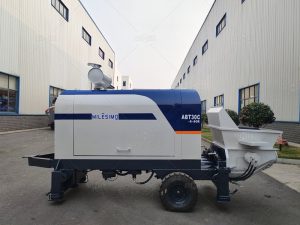
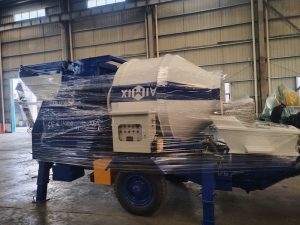
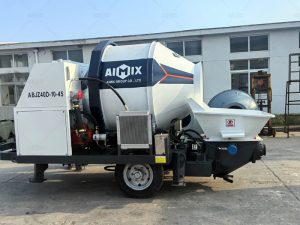
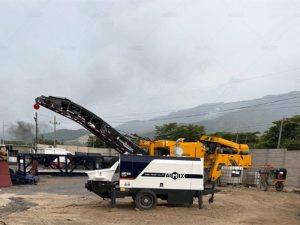
    ABT30C trailer concrete pump for Guatemala in factory

  • How Does the Raw Metal Material Influence Cost of Concrete Pump with Mixer

    The selection and utilization of raw metal materials represent a fundamental cost driver in the manufacturing of concrete mixer with pump for sale, directly influencing both the initial equipment price and long-term ownership economics that collectively determine the ultimate cost of concrete pump ownership. When manufacturers engineer a concrete mixer with pump for sale, they must carefully balance material specifications against performance requirements, durability expectations, and market positioning to create equipment that delivers reliable service while remaining competitively priced within the construction equipment marketplace. The metal composition employed throughout a concrete mixer with pump for sale varies significantly based on component function, with structural elements requiring different material properties than wear components, hydraulic parts, or mixing elements, each contributing distinct cost implications that collectively establish the baseline cost of concrete pump equipment before additional manufacturing expenses are incorporated. High-strength steel alloys typically form the foundation of quality equipment, providing the structural integrity necessary to withstand the substantial forces generated during both mixing and pumping operations, with the specific grade, thickness, and treatment of these steels directly influencing both material costs and the resulting durability that determines maintenance frequency and operational lifespan. The specialized metals required for high-wear components such as mixing blades, concrete contact surfaces, and hydraulic system elements command premium pricing due to their advanced metallurgical properties, specialized manufacturing processes, and often limited production volumes compared to standard structural steels, creating cost differentials that significantly impact the final cost of concrete pump equipment despite their relatively small proportional volume within the complete machine. Understanding these material relationships provides valuable insight into the substantial price variations observed across different models of concrete mixer with pump for sale, explaining why apparently similar equipment can carry dramatically different price tags based largely on the quality and specification of metals employed in their construction, and how these material decisions ultimately influence the long-term cost of concrete pump ownership through their effect on durability, maintenance requirements, and operational reliability.

    Diesel Concrete Pump with Mixer wrapped in plastic

    Structural Frame Materials and Base Cost Determination

    The metal selection for the structural frame of a concrete mixer with pump for sale establishes the fundamental cost foundation upon which all additional expenses are layered, directly determining both the equipment’s durability and a significant portion of the final cost of concrete pump presented to buyers. Manufacturers designing a concrete mixer with pump for sale must select frame materials that provide sufficient strength to withstand the combined static and dynamic loads encountered during concrete mixing, pumping, and transportation, while simultaneously managing weight considerations that influence both material costs and equipment portability. High-tensile steel represents the most common choice for quality equipment, offering an optimal balance between strength, workability, and cost that enables robust construction without excessive weight penalties that would diminish the practical utility of a concrete mixer with pump for sale. The specific grade of steel employed directly influences the cost of concrete pump manufacturing, with higher-strength alloys commanding premium prices but enabling lighter section designs that reduce overall weight while maintaining structural integrity, potentially creating manufacturing efficiencies that partially offset their increased material costs. Additionally, specialized steel treatments including normalized rolling, thermal hardening, or specialized coatings further increase material expenses but enhance durability and corrosion resistance, contributing to long-term value that justifies their incorporation despite increasing the initial cost of concrete pump equipment. The thickness and design of structural members represent another material cost consideration, with robust framing requiring more substantial material volumes that directly increase both raw material expenses and manufacturing complexity, yet delivering the structural reliability necessary for professional equipment expected to withstand years of demanding service. These frame material decisions collectively establish the core value proposition of a concrete mixer with pump for sale, creating a durable equipment foundation that supports all other systems while representing a substantial portion of the total material costs that manufacturers must recover through the final cost of concrete pump pricing structure, demonstrating how foundational material choices create both immediate cost implications and long-term performance characteristics that define the equipment’s operational capabilities and economic value throughout its service life.

    Wear Component Metallurgy and Replacement Cost Implications

    The specialized metals employed in high-wear components of a concrete mixer with pump for sale represent a critical cost factor that influences both initial equipment pricing and long-term operating expenses, creating a complex economic relationship that informed buyers must understand when evaluating the true cost of concrete pump ownership. Components including mixing blades, concrete contact surfaces, pipeline elements, and pumping mechanism parts experience extreme abrasion from concrete aggregates, requiring metallurgical solutions that provide exceptional wear resistance while maintaining necessary mechanical properties for reliable operation. The manufacturing of a concrete mixer with pump for sale typically incorporates hardened steel alloys with specific carbon and chromium content for these critical wear areas, with more advanced equipment utilizing specialized treatments such as boron steel hardening, tungsten carbide overlays, or ceramic composite surfaces that dramatically increase material costs but extend service life between replacements. These premium materials directly increase the initial cost of concrete pump equipment, yet deliver substantial long-term value through reduced replacement frequency, minimized downtime, and maintained performance consistency that justifies their additional expense for professional applications. The economic calculation becomes particularly important for the concrete mixer with pump for sale market, where equipment may operate for extended periods between major maintenance intervals, making component longevity a crucial consideration that transcends simple initial price comparisons to encompass total ownership costs throughout the equipment’s operational life. Additionally, the availability and pricing of replacement wear components influence the ongoing cost of concrete pump operation, with specialized metals often requiring specific manufacturing processes and limited production volumes that maintain higher pricing structures compared to standard steel components. This wear component metallurgy demonstrates how material selection creates a fundamental trade-off between initial equipment expense and long-term operating costs, with quality-focused manufacturers of concrete mixer with pump for sale typically investing in superior wear materials that increase the upfront cost of concrete pump acquisition while delivering substantially lower lifetime operating expenses through extended service intervals and reduced replacement part requirements.

    Hydraulic System Components and Precision Metal Requirements

    The sophisticated hydraulic systems that power both the mixing and pumping functions of a concrete mixer with pump for sale incorporate precision metal components with exacting material specifications that significantly influence manufacturing costs and consequently the final cost of concrete pump equipment. Hydraulic cylinders, valves, pumps, and actuators require materials with specific properties including high strength-to-weight ratios, excellent machinability, and superior surface characteristics that maintain sealing integrity under extreme pressure conditions, with each requirement adding cost implications that manufacturers must incorporate into the concrete mixer with pump for sale pricing structure. The precision machining of hydraulic components demands materials with consistent metallurgical properties and minimal inclusions that could compromise finished surface quality or create failure points under high-pressure operation, with these quality requirements necessitating premium material stocks that increase the cost of concrete pump manufacturing compared to standard structural components. Specialized coatings and surface treatments including chrome plating, nitriding, or specialized hardening processes further enhance hydraulic component performance but add manufacturing steps and material expenses that contribute to the overall cost of concrete pump equipment. The material selection for hydraulic system components also influences long-term reliability and maintenance requirements, with superior metals maintaining precise tolerances and surface finishes throughout extended service life, reducing hydraulic fluid contamination, minimizing seal wear, and preventing performance degradation that would diminish the operational efficiency of a concrete mixer with pump for sale. This relationship between hydraulic component materials and operational reliability demonstrates how quality-focused manufacturers justify premium cost of concrete pump pricing through investments in superior materials that deliver sustained performance and reduced maintenance costs throughout the equipment’s service life, creating long-term value that exceeds the initial price differential compared to equipment utilizing standard-grade hydraulic components with more limited durability and performance characteristics.

    Corrosion Resistance Materials and Environmental Durability

    The incorporation of corrosion-resistant metals throughout a concrete mixer with pump for sale represents another significant material cost factor that influences both initial pricing and long-term equipment value, particularly important for equipment operating in the challenging environments typical of construction applications. Concrete operations inherently expose equipment to moisture, chemical additives, and abrasive materials that accelerate corrosion, necessitating material strategies that protect against deterioration that would compromise structural integrity, operational performance, and equipment lifespan. Stainless steel components in critical areas, specialized coatings on structural elements, and corrosion-resistant alloys in vulnerable locations all contribute to the durability of a concrete mixer with pump for sale but simultaneously increase material costs that manufacturers must reflect in the cost of concrete pump presented to buyers. The economic calculation involves balancing these additional material expenses against the extended service life and maintained performance they enable, with quality manufacturers typically opting for superior corrosion protection that justifies the increased cost of concrete pump through reduced maintenance requirements, longer operational lifespan, and higher residual value at equipment replacement. The specific corrosion challenges of a concrete mixer with pump for sale create particular material requirements, with the mixing chamber requiring different solutions than the pumping mechanism, hydraulic system, or structural frame, each demanding appropriate material selections that address their unique exposure conditions without excessively inflating the overall cost of concrete pump beyond market expectations. Additionally, environmental regulations in various markets may influence material selections, with restrictions on certain coatings or treatments potentially limiting options and affecting both performance capabilities and manufacturing costs for concrete mixer with pump for sale equipment destined for specific regions. These corrosion considerations demonstrate how material decisions extend beyond simple structural requirements to encompass long-term durability factors that significantly influence the total ownership cost of concrete pump equipment throughout its operational life, with initial investments in superior protection typically delivering substantial returns through extended service life and reduced maintenance expenses that justify their incorporation despite increasing the upfront equipment price.

    Weight Optimization Materials and Transportation Economics

    The strategic use of weight-optimized metals in a concrete mixer with pump for sale represents a sophisticated cost balancing act that influences both manufacturing expenses and operational economics, creating complex relationships between material selection, performance capabilities, and practical utility. Heavy equipment like a concrete mixer with pump for sale must balance structural requirements against practical weight limitations that influence transportation efficiency, setup complexity, and operational flexibility, creating demand for materials that provide maximum strength with minimal mass. High-strength low-alloy steels, aluminum components where appropriate, and advanced composite materials in non-critical applications all contribute to weight reduction in quality equipment, but typically command premium pricing that increases the cost of concrete pump manufacturing compared to conventional steel alternatives. This weight optimization delivers operational value through improved fuel efficiency during transportation, easier positioning on job sites, and potentially reduced regulatory limitations for equipment movement, benefits that partially offset the increased material expenses through enhanced operational flexibility and reduced operating costs. The economic calculation varies based on equipment size and application, with larger concrete mixer with pump for sale models typically justifying more extensive weight optimization due to the substantial operational benefits, while smaller equipment may utilize more conventional materials to maintain an accessible cost of concrete pump price point for budget-conscious markets. Additionally, the manufacturing processes for advanced materials often require specialized equipment, additional processing steps, or unique expertise that further contributes to the final cost of concrete pump equipment beyond the simple raw material expenses, creating a complex cost structure that reflects both material specifications and manufacturing capabilities. This weight consideration demonstrates how material selection influences not only the initial cost of concrete pump acquisition but also long-term operational economics, with strategic material decisions creating equipment that delivers superior practical utility despite potentially higher upfront costs, particularly valuable for applications where mobility and setup efficiency directly influence project economics and equipment utilization rates.

    Global Material Markets and Price Volatility Impact

    The interconnected global markets for industrial metals create price volatility that directly influences the manufacturing costs of concrete mixer with pump for sale equipment, introducing economic uncertainty that manufacturers must navigate when establishing and maintaining stable pricing for their products. Steel, as the primary material in concrete mixer with pump for sale construction, experiences significant price fluctuations based on global production levels, trade policies, raw material availability, and industrial demand patterns, with these variations directly impacting the baseline cost of concrete pump manufacturing before additional components and processes are considered. The specialized alloys required for high-performance components face even greater price volatility due to their more limited production volumes and complex manufacturing processes, creating additional cost uncertainty that manufacturers must absorb or pass through to buyers in the final cost of concrete pump pricing. This material cost instability complicates both manufacturing planning and customer pricing, with quality-focused manufacturers of concrete mixer with pump for sale equipment often implementing sophisticated material sourcing strategies, strategic inventory management, and sometimes long-term supply agreements to mitigate these fluctuations and maintain more consistent cost of concrete pump structures for their customers. The global nature of metal markets means that regional developments including trade disputes, production disruptions, or regulatory changes in geographically distant locations can influence material costs for concrete mixer with pump for sale manufacturers worldwide, creating economic interconnections that transcend local market conditions and introduce pricing dynamics that may seem disconnected from regional economic factors. This global material market influence demonstrates why the cost of concrete pump equipment may experience unexpected changes unrelated to manufacturing efficiency or design improvements, reflecting instead the complex dynamics of worldwide industrial material markets that establish fundamental cost foundations upon which all additional manufacturing expenses and profit margins are layered to determine the final price of concrete mixer with pump for sale equipment across different markets and time periods.

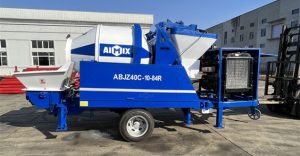
    ABJZ30C Concrete Mixing Pump before Wrapping

  • How Does Warranty Influence Stationary Small Concrete Pump Price

    The relationship between warranty coverage and the small concrete pump price for a stationary concrete pump represents a critical consideration that extends far beyond simple price comparison, fundamentally affecting the total cost of ownership and long-term operational reliability. When evaluating a stationary concrete pump for purchase, the warranty terms provided by the manufacturer or supplier directly influence the initial investment while serving as a key indicator of the equipment’s build quality and the company’s confidence in its product. A comprehensive warranty package, while potentially increasing the upfront small concrete pump price, functions as a financial risk management tool that protects against premature component failures, covers expensive repair costs, and ensures operational continuity during the coverage period. Conversely, an attractively low small concrete pump price often correlates with limited or short-duration warranty protection, potentially exposing buyers to significant unforeseen repair expenses and downtime that can quickly erase initial savings. The warranty’s value proposition must be carefully analyzed in terms of its duration, scope of coverage, claim procedures, and the supplier’s reputation for honoring their commitments, as these factors collectively determine whether the higher initial investment in a well-warranted stationary concrete pump translates into genuine long-term value and peace of mind for the equipment owner.

    ABT30C trailer concrete pump for Guatemala in factory
    ABT30C trailer concrete pump for Guatemala in factory

    Warranty as a Reflection of Manufacturing Quality and Reliability

    The specific terms and duration of a warranty policy for a stationary concrete pump provide valuable insights into the manufacturer’s confidence in their product’s durability and the quality of materials and workmanship employed in its construction. A reputable manufacturer offering an extended warranty period on their stationary concrete pump essentially provides a documented guarantee that critical components like the hydraulic system, pumping cylinders, electrical controls, and structural frame are engineered to withstand demanding operational conditions over an extended timeframe. This confidence stems from rigorous quality control processes, the use of premium-grade materials in high-wear components, and comprehensive testing protocols that identify potential failure points before the equipment reaches the customer. Consequently, this manufacturing excellence and the resulting robust warranty protection are factored into the initial small concrete pump price, making well-warranted units appear more expensive than those with minimal coverage. However, this higher initial small concrete pump price represents an investment in proven reliability and reduced probability of disruptive breakdowns, whereas equipment with limited warranty often indicates potential compromises in component quality that may lead to frequent repairs, unplanned downtime, and ultimately higher lifetime costs despite the tempting lower purchase price.

    Comprehensive Versus Limited Warranty Coverage Structures

    The scope of coverage detailed in the warranty documentation significantly impacts the real value of the protection offered and its influence on the small concrete pump price for a stationary concrete pump. A comprehensive warranty typically includes full coverage for parts replacement, labor costs for repairs, and sometimes even incidental expenses like transportation of components to and from service centers for the entire warranty period. This extensive coverage particularly benefits the complex hydraulic systems and precision engineering of a stationary concrete pump, where a single major component failure could generate repair costs exceeding the price difference between well-warranted and minimally-warranted equipment. In contrast, limited warranties might only cover specific components for shortened periods, exclude labor charges entirely, or contain numerous exclusions that render the coverage practically ineffective when repairs are actually needed. Manufacturers and suppliers calculating the small concrete pump price must account for their potential liability under the warranty terms, leading to higher initial prices for models with extensive coverage as they essentially pre-fund a repair reserve through the purchase price. Buyers should meticulously compare warranty certificates beyond their duration, examining exactly which components are covered, understanding claim procedures, and verifying whether the warranty requires using specific service providers or genuine parts to remain valid, as these details fundamentally alter the protection’s actual value.

    Regional Support Infrastructure and Service Response Capabilities

    The practical value of any warranty for a stationary concrete pump is heavily dependent on the manufacturer’s or supplier’s service infrastructure within the buyer’s operational region, a factor that directly influences the justified small concrete pump price premium for supported equipment. A robust warranty backed by readily available technical support, strategically located service centers, and adequate inventory of genuine spare parts ensures that when issues arise, they can be resolved promptly with minimal operational disruption. This operational security comes at a cost that manufacturers incorporate into their small concrete pump price, covering expenses for maintaining trained technicians, operating service facilities, and managing spare parts inventory specifically to support their warranty commitments. Conversely, a lower small concrete pump price might indicate limited local support capabilities, meaning that even with valid warranty coverage, equipment owners could face extended downtime waiting for specialized technicians or imported replacement parts, effectively diminishing the warranty’s practical benefit. Before accepting any small concrete pump price, buyers should verify the supplier’s response time guarantees, the proximity of authorized service providers to their job sites, and the availability of essential spare parts within their region, as these factors determine whether the warranty provides genuine protection or merely theoretical coverage that proves difficult to utilize when needed most.

    Long-Term Cost Implications and Total Ownership Economics

    The fundamental financial question surrounding warranty and small concrete pump price involves calculating the total cost of ownership rather than focusing exclusively on the initial purchase price of the stationary concrete pump. A higher small concrete pump price coupled with a strong warranty represents a predictable, fixed cost that covers potential repairs during the coverage period, transforming variable and unpredictable repair expenses into a known initial investment. This financial predictability enables more accurate project budgeting and protects against catastrophic repair bills that could severely impact business profitability, particularly for small and medium contractors with limited capital reserves. The alternative approach of selecting a stationary concrete pump with lower small concrete pump price but inadequate warranty protection might appear financially advantageous initially but creates significant financial vulnerability to unexpected component failures. When critical systems like the hydraulic pump, main bearing, or control system fail outside of warranty, the repair costs—including parts, specialized labor, and project delays—can easily surpass the initial price difference between well-warranted and minimally-protected equipment. Therefore, the warranty’s influence on small concrete pump price should be evaluated as a risk management decision, where paying a premium for comprehensive coverage provides financial protection and operational stability that typically delivers superior long-term value compared to the seemingly economical but risky alternative of minimal warranty protection.

    Negotiating Warranty Terms and Understanding Transfer Conditions

    Prospective buyers should recognize that warranty terms for a stationary concrete pump are sometimes negotiable elements that can enhance value without necessarily increasing the final small concrete pump price. Knowledgeable buyers can often discuss extending the standard warranty duration, expanding coverage to include additional components, or improving response time guarantees as part of the purchase negotiation, particularly when dealing directly with manufacturers or authorized distributors. Some suppliers might demonstrate flexibility in warranty terms to secure a sale while maintaining their listed small concrete pump price, effectively delivering greater value through enhanced protection rather than price reduction. Additionally, understanding conditions affecting warranty validity is crucial, as most manufacturers require proper installation by certified technicians, adherence to prescribed maintenance schedules using genuine parts, and operation within specified performance parameters to maintain coverage. These maintenance requirements, while essential for preserving warranty protection, introduce ongoing costs that buyers must factor into their total equipment expenditure beyond the initial small concrete pump price. For businesses considering equipment resale, the transferability of the remaining warranty to subsequent owners can significantly enhance the stationary concrete pump’s residual value, potentially recovering a portion of the initial price premium paid for comprehensive coverage. This negotiable aspect of warranty packages provides opportunities for astute buyers to maximize their protection value while managing the overall financial impact of their stationary concrete pump investment.

    trailer concrete pump went through test in factory before shipment
    trailer concrete pump went through test in factory before shipment
  • The Intricate Relationship: How Concrete Pump Specifications Dictate Mini Concrete Pump Machine Price

    When embarking on the procurement of equipment for a construction project, understanding the direct and profound correlation between concrete pump specifications and the ultimate mini concrete pump machine price is paramount for making a cost-effective and project-appropriate investment. The asking price for any mini concrete pump is not a random figure but a carefully calculated reflection of its engineered capabilities, material quality, and technological features, all of which are meticulously outlined in its specification sheet. Essentially, the specifications act as a detailed blueprint of the machine’s potential, and each component within that blueprint carries a specific cost implication, creating a layered and complex pricing structure. A prospective buyer analyzing the concrete pump specifications is, whether they realize it or not, conducting a preliminary cost-benefit analysis, where every performance metric, from output volume to pressure capacity, directly influences the final financial outlay. Therefore, a deep dive into these technical details is not merely an exercise for engineers but a crucial financial step for any contractor or business owner aiming to optimize their equipment budget and ensure the selected pump delivers a return on investment through reliable, efficient, and versatile on-site performance, making the comprehension of this relationship a fundamental aspect of the purchasing process.

    ABT40D mini concrete line pump

    Output Capacity and System Pressure: The Core Pillars of Cost

    The most immediate and significant factor within the concrete pump specifications that influences the mini concrete pump machine price is the unit’s output capacity, which is typically measured in cubic meters per hour. A model designed to deliver a higher volume of concrete, such as 40 to 50 cubic meters per hour, is inherently more expensive than a basic model capable of only 10 to 15 cubic meters per hour. This disparity in cost arises from the need for a more powerful engine, a larger and more robust hydraulic system, and bigger-diameter cylinders and pipelines to handle the increased material flow. These heavy-duty components are costlier to manufacture and assemble, a cost that is directly passed on to the consumer. Consequently, the theoretical output capacity serves as a primary cost driver; selecting a pump with an output that far exceeds the demands of your typical projects means you are paying a premium for unused potential, while opting for an underpowered unit can lead to project delays and increased labor costs, making an accurate assessment of your required volume output the first and most critical step in correlating specifications with an appropriate budget. Closely tied to output volume is the specification for maximum pressure, measured in megapascals or bars, and the theoretical vertical and horizontal pumping distance. This specification is a direct indicator of the pump’s power and its ability to overcome resistance, whether from friction in the pipeline or the force of gravity when pumping to height or across long distances. A mini concrete pump machine price will see a considerable increase for a model engineered to pump concrete 150 meters vertically compared to one limited to 50 meters. Achieving these greater distances requires a high-pressure hydraulic system with more powerful pumps, heavier-duty valves, and reinforced piping, all of which are manufactured from higher-grade materials and with more precise tolerances, contributing to a higher manufacturing cost.

    Power Source and Hydraulic System Configuration: The Engine’s Financial Impact

    The type and power of the engine itself is a major specification that forms a core part of the mini concrete pump machine price. Manufacturers offer options ranging from dependable diesel engines to electric motors and increasingly, eco-friendly hybrid systems. A diesel-powered pump, often the most powerful and versatile for remote sites without grid power, typically commands a higher price than a comparable electric model due to the complexity and cost of the diesel engine and its emission control systems. However, electric motors, while potentially cheaper upfront and quieter in operation, may require expensive on-site power infrastructure. The horsepower or kilowatt rating of the engine is another direct cost factor; a 60-horsepower diesel engine will be a more significant cost component than a 30-horsepower one. Beyond the prime mover, the configuration of the hydraulic system—whether it is an open or closed-loop system—also impacts the cost. Advanced closed-loop systems offer smoother operation and better energy efficiency but are more complex and expensive to produce than standard open-loop systems, illustrating that even specifications deep within the machine’s operational heart have a tangible and direct effect on the final price tag.

    Chassis, Boom, and Technological Enhancements: Features That Add Value and Cost

    Beyond the core pumping mechanics, the chassis and structural specifications play a crucial role in determining the mini concrete pump machine price, particularly concerning mobility and setup. A mini pump mounted on a truck chassis offers unparalleled mobility and quick deployment from site to site, but this convenience is reflected in a significantly higher price that includes the cost of the truck itself. In contrast, trailer-mounted or stationary mini pumps are more affordable options but sacrifice mobility. Specifications related to the boom, if equipped, are major price differentiators; a pump with a longer, articulating robotic boom that can place concrete with pinpoint accuracy over a large area will be exponentially more expensive than a simpler model without a boom that relies on manual labor to drag and place flexible hose. The material of the boom—high-strength steel versus standard steel—and the sophistication of its control system further add to the cost. Additionally, features like remote control operation, an automated lubrication system, and advanced diagnostic panels are no longer mere luxuries but productivity-enhancing specifications that involve additional electronic components, sensors, and software, all of which contribute to a higher, yet often justifiable, mini concrete pump machine price by reducing labor costs and enhancing operational safety and precision on the job site.

    Strategic Specification Analysis for Optimal Financial Investment

    In conclusion, the intricate dance between concrete pump specifications and the final mini concrete pump machine price is a definitive one, where every performance metric and feature carries a direct cost implication. A thorough analysis of specifications like output volume, pressure capacity, engine type and power, and chassis configuration is not just technical due diligence but the most effective method for financial planning and value assessment. By carefully aligning the project’s specific demands with the appropriate set of specifications, a buyer can avoid the dual pitfalls of overpaying for superfluous capability or underestimating the need for critical performance, thereby ensuring that the invested capital directly translates into on-site productivity, efficiency, and ultimately, project success and profitability.

    ABT30C trailer type portable mini concrete pump

  • How to Get Reasonable Mixer Type Concrete Pumping Machine Price Through Promotion

    For construction businesses, contractors, and project managers, investing in a concrete mixer pump is a significant financial decision—one that directly impacts project budgets, operational efficiency, and long-term profitability. The concrete pumping machine price often varies widely, influenced by factors like model capacity, technology integration, brand reputation, and after-sales support. While quality should never be compromised, leveraging strategic promotions is a proven method to secure a reasonable price without sacrificing performance. This guide explores actionable strategies to unlock favorable pricing through promotions, helping buyers balance cost savings with the reliability of their concrete pumping equipment.

    Two Electric Concrete Mixer Pumps without Belt Feeder

    Conduct Targeted Market Research to Identify Authentic Promotional Opportunities

    Before diving into promotions, thorough market research is the foundation of securing a reasonable concrete pumping machine price. Many buyers fall prey to “fake promotions”—superficial discounts that mask inflated base prices—because they lack clarity on the standard market range for concrete mixer pumps. To avoid this, start by compiling data on average prices from reputable sources: manufacturer websites (e.g., Luton Group, Sany), B2B platforms (AliExpress Business, Made-in-China), and local distributors. For example, standard truck-mounted concrete mixer pumps typically range from \(20,000 to \)80,000, while portable diesel models may start as low as $2,000 for entry-level options. By establishing this baseline, you can quickly identify promotions that offer genuine value (e.g., 15–30% off standard prices) versus those that are merely marketing gimmicks.
    Next, research supplier motivations behind promotions. Manufacturers and distributors often run promotions to achieve specific goals: clearing excess inventory (e.g., older models being phased out), meeting quarterly sales targets, or expanding market share in a new region. For instance, a supplier may offer deep discounts on last year’s concrete mixer pump models to make room for updated versions with minor technological tweaks—these units are still high-quality but come at a reduced concrete pumping machine price. Similarly, end-of-year or off-season promotions (e.g., during slow construction months like winter in temperate regions) are common, as suppliers aim to maintain cash flow when demand is low. By aligning your purchase with these supplier objectives, you position yourself as a valuable buyer and increase your chances of negotiating even better terms.
    Additionally, subscribe to newsletters, follow industry social media accounts, and join construction equipment forums to stay updated on upcoming promotions. Many suppliers announce exclusive deals to their email lists or social media followers, such as flash sales, limited-time coupon codes, or bundle offers (e.g., a concrete mixer pump plus free maintenance kits). For example, AliExpress Business frequently runs “Construction Equipment Mega Sales” with up to 70% off select concrete mixer pumps, but these deals often last only 48–72 hours. Staying vigilant through targeted research ensures you never miss out on time-sensitive, high-value promotions.

    Leverage Bulk Purchasing Promotions for Significant Cost Savings

    Bulk purchasing is one of the most effective ways to secure a reasonable concrete pumping machine price through promotion, especially for businesses with ongoing or multiple projects. Manufacturers and distributors often offer tiered discounts for large orders, as bulk purchases help them reduce per-unit production costs, streamline logistics, and improve inventory turnover. For example, a supplier may charge \(35,000 for a single truck-mounted concrete mixer pump but offer a 20% discount (reducing the price to \)28,000 per unit) for orders of 5 or more. This translates to $35,000 in total savings for a 5-unit order—funds that can be reinvested into other project needs like materials or labor.
    Even small businesses or individual contractors can benefit from bulk purchasing promotions by forming buying consortia. Partner with other local contractors, construction firms, or project managers to combine your orders for concrete mixer pumps. For instance, if three contractors each need one pump, pooling their orders to meet the supplier’s minimum bulk requirement (e.g., 3 units) can unlock the same tiered discounts as a large company. This approach not only lowers the concrete pumping machine price but also allows smaller buyers to access perks typically reserved for big clients, such as free shipping, extended warranties, or priority technical support.
    When negotiating bulk promotions, be clear about your requirements to avoid hidden costs. Specify the model, capacity, and any customizations (e.g., fuel type, hose length) upfront, and ensure the discount is applied to the final price—including taxes and shipping. For example, some suppliers may offer a 25% discount on the base price but charge extra for delivery, eroding the savings. By clarifying all terms in writing, you ensure the promotion delivers the expected value and avoid disputes later.

    Capitalize on Bundle Promotions and Value-Added Incentives

    Beyond direct price discounts, bundle promotions and value-added incentives are excellent ways to secure a reasonable concrete pumping machine price while maximizing the overall value of your purchase. Many suppliers bundle concrete mixer pumps with essential accessories or services, effectively reducing the total cost of ownership. Common bundles include a concrete mixer pump plus spare parts (e.g., hoses, filters, seals), free installation, or a 1–2 year maintenance plan. For example, a supplier might offer a standard concrete mixer pump for \(40,000 or a bundle with free installation (valued at \)2,500) and a 1-year maintenance package (valued at \(3,000) for the same price—this equates to \)5,500 in added value without increasing the upfront cost.
    Value-added incentives can also include extended warranties, training sessions for your team, or flexible payment terms. For instance, some manufacturers offer a 5-year warranty (instead of the standard 2 years) as part of a promotional offer, providing peace of mind and reducing long-term repair costs. Others may offer zero-interest financing for 6–12 months, allowing you to spread out the payment of the concrete pumping machine price without accruing additional charges. This is particularly beneficial for small businesses or projects with tight cash flow, as it avoids the need for large upfront investments.
    When evaluating bundle promotions, calculate the total value of the included items or services to determine if the offer is worthwhile. For example, a bundle that includes a concrete mixer pump and a $1,000 spare parts kit may seem appealing, but if you already have a stock of spare parts, the value is diminished. Instead, look for bundles that align with your specific needs—such as a portable concrete mixer pump bundled with a trailer for easy transportation, or a high-capacity model bundled with advanced monitoring software to improve operational efficiency. By focusing on bundles that add practical value, you ensure the promotion enhances your investment rather than adding unnecessary costs.

    Negotiate Custom Promotions Tailored to Your Needs

    While pre-packaged promotions are convenient, negotiating custom promotions can yield even better results when seeking a reasonable concrete pumping machine price. Suppliers are often willing to adjust promotions to meet the needs of serious buyers, especially if you can demonstrate long-term value (e.g., repeat business, referrals) or unique purchasing circumstances (e.g., urgent project timelines, specialized requirements). For example, if you need a concrete mixer pump with a specific capacity that isn’t included in current promotions, you can negotiate a discount by agreeing to a quick purchase (e.g., within 2 weeks) or committing to future orders.
    To negotiate effectively, come prepared with market research, your budget constraints, and a clear list of non-negotiables (e.g., minimum capacity, warranty length). Start by expressing interest in a specific concrete mixer pump model and ask about current promotions—then propose a custom arrangement that benefits both parties. For instance, you might say: “I’m interested in the XYZ model, which is currently listed at $45,000. I can commit to purchasing two units within the next month if you can offer a 15% discount and include free shipping.” Suppliers are more likely to agree to such requests if they see a clear path to meeting their sales goals.
    Another negotiation tactic is to leverage competitor offers. If you’ve received a better concrete pumping machine price from a rival supplier, share this information (without disclosing sensitive details) and ask if your preferred supplier can match or beat it. For example: “Supplier A has offered me the same model for $38,000 with a 3-year warranty. Would you be able to adjust your promotion to match that price or include an extended warranty?” Most suppliers will not want to lose a sale to a competitor and will be flexible to retain your business.

    Avoid Common Pitfalls When Using Promotions to Secure Pricing

    While promotions can lead to significant savings, it’s important to avoid common pitfalls that can undermine your efforts to secure a reasonable concrete pumping machine price. One of the biggest mistakes is prioritizing price over quality—opting for the cheapest concrete mixer pump on promotion without verifying its durability, performance, or after-sales support. A low-quality pump may break down frequently, causing project delays and increasing long-term costs (e.g., repairs, replacements). Always research the supplier’s reputation, read customer reviews, and request product specifications or demos before making a purchase.
    Another pitfall is overlooking hidden costs. Some promotions advertise a low concrete pumping machine price but exclude essential expenses like shipping, taxes, installation, or customization fees. For example, a supplier may offer a concrete mixer pump for \(25,000 on promotion, but charge \)5,000 for shipping and \(3,000 for installation—raising the total cost to \)33,000, which may be higher than the standard price from another supplier. Always ask for a detailed breakdown of all costs upfront and ensure they are included in the promotional agreement.

    Finally, avoid rushing into a purchase to take advantage of a promotion. While time-sensitive deals (e.g., flash sales) require quick action, it’s still important to verify that the concrete mixer pump meets your project needs. For example, a portable pump on promotion may be cheaper, but if your project requires a high-capacity truck-mounted model, the promotion will not serve your purposes. Take the time to evaluate the pump’s specifications (e.g., maximum pumping height, output capacity, fuel efficiency) and ensure it aligns with your operational requirements—even if it means missing out on a short-term promotion.

    Conclusion

    Securing a reasonable concrete pumping machine price for a concrete mixer pump through promotion requires a combination of targeted research, strategic negotiation, and careful evaluation of offers. By conducting market research to identify authentic promotions, leveraging bulk purchasing and bundle deals, negotiating custom terms, and avoiding common pitfalls, buyers can unlock significant cost savings without compromising on quality. Remember, the goal is not just to find the cheapest price, but to secure the best value—an affordable concrete mixer pump that meets your project needs and delivers reliable performance for years to come. With the right approach, promotions can turn a major investment into a cost-effective decision that boosts your bottom line.

    Concrete Mixing Pump after Belt Feeder is Removed

  • What Size of Mini Concrete Pump Machine Do South Africa Customers Prefer for Rural House Construction

    For many builders working in rural regions of South Africa, choosing the right size of mini concrete pump machine is one of the most important decisions before starting a small housing project. Rural areas usually have limited access roads, narrow construction sites, and fewer heavy-duty equipment options, so a pump that is compact, efficient, and easy to maintain becomes the most practical choice. When a customer searches for a small concrete pump for sale South Africa, their main expectations often include stable pumping capacity, low operating cost, compatibility with locally available concrete mixes, and reliability in remote areas where service support may take time to reach. Therefore, understanding the real working conditions helps determine why certain pump sizes become more popular than others among rural home builders, small contractors, and individual homeowners.

    Drum Mixer Concrete Pump South Africa ABJZ40C Model

    Why Mini Concrete Pumps Are Popular in Rural Housing Projects

    The popularity of the mini concrete pump machine in South African rural construction is directly linked to its ability to deliver consistent concrete flow without requiring a large team or extensive onsite preparation. Many rural projects involve building single-story or double-story family houses, small community buildings, schools, and farm structures. These projects do not require high-capacity boom pumps and cannot accommodate bulky equipment. Instead, they benefit from portable solutions that can be transported easily from village to village. A small concrete pump for sale South Africa often weighs less, consumes less fuel or electricity, and can handle the moderate output required for typical slab, column, and beam casting. This balance of affordability and functionality is exactly what small contractors in rural districts look for when selecting pump size.

    Common Capacity Ranges for Rural House Construction

    When choosing the best mini concrete pump machine size, most South African customers consider two major specifications: the theoretical output per hour and the maximum pumping distance. In rural housing, the required capacity is usually between 20 to 40 cubic meters per hour, which fits perfectly with the working pace of small building teams. A small concrete pump for sale South Africa in this range is powerful enough to handle house foundations, wall casting, small retaining structures, and slab work without creating unnecessary waste or requiring expensive concrete batching equipment. Customers building simple houses rarely need extremely high output because concrete mixing in rural areas is often done with local mixers or small batching setups; thus, a moderate pump size keeps the operation efficient and stable.

    Why 30m³/h Mini Concrete Pumps Are the Most Preferred Size

    Based on purchasing behavior and feedback from major suppliers, the 30m³/h mini concrete pump machine is one of the most popular sizes among South African rural construction customers. This capacity perfectly matches the daily work volume of small contractor teams, providing enough output to complete common tasks within reasonable timeframes without overwhelming the mixing team. A pump of this size also offers excellent balance between mobility and performance. It can deliver concrete over distances suitable for most rural homes—usually 80 to 120 meters horizontally and up to 30 meters vertically—without requiring oversized engines or costly hydraulic systems. For customers looking for small concrete pump for sale South Africa, the 30m³/h capacity hits the sweet spot in terms of affordability, efficiency, and practicality.

    Matching Pump Size With Local Concrete Mixing Conditions

    Another reason South African customers prefer mid-range mini concrete pump machine sizes is the type of concrete used on rural sites. Many rural builders rely on job-site mixing using small drum mixers or low-cost batching units. Because the mixing volume is limited, a pump with a capacity higher than 40m³/h may lead to delays, inconsistent flow, or concrete segregation. A 20–30m³/h pump, however, matches perfectly with the output of commonly used mixers, ensuring smooth pumping and steady workflow. Moreover, South African aggregates in rural regions can be slightly uneven in grading, so a pump size with moderate pressure and cylinder dimensions helps reduce clogging and ensures a more forgiving pumping process.

    Space Limitations and Road Conditions Influence Pump Size

    Rural construction sites are often located in narrow plots, hillside villages, or farm areas with limited vehicle access. This environment strongly affects the preferred size of small concrete pump for sale South Africa. A compact mini concrete pump machine can be transported on small trucks or even trailers pulled by pickups, making it much more practical than larger stationary pumps. Customers frequently choose pumps that can be maneuvered easily on uneven rural roads and fit comfortably in tight workspaces. This is why extremely large pumps are rarely used in rural housing; they require bigger transportation vehicles and more space for setup, which rural projects generally lack.

    Cost Considerations Make Smaller Pumps More Attractive

    Budget limitations also play a significant role in determining preferred pump size. Rural homeowners and local builders often operate with tight construction budgets, so choosing a mini concrete pump machine that does not require high fuel consumption or expensive maintenance becomes important. A 20–30m³/h model is usually lower in cost than high-output pumps but still reliable enough for long-term use. In addition, the spare parts for small concrete pump for sale South Africa models in this category are widely available, easy to replace, and less costly. This makes the investment more manageable for contractors who rely on frequent small-scale projects.

    Which Pump Size Is Ideal for Most South African Rural Construction?

    Taking into account road conditions, typical house designs, available mixing methods, workforce size, and local budgets, the most suitable mini concrete pump machine size for South African customers in rural housing construction is generally 20 to 30 cubic meters per hour, with 30m³/h being the most preferred. It provides the right balance of power, affordability, and flexibility needed for rural projects. It works well for foundations, floor slabs, columns, beams, and small retaining walls, ensuring consistent productivity without overwhelming the team or equipment. For customers searching for a reliable small concrete pump for sale South Africa, this capacity range delivers smooth operation, efficient pumping, and long-term value, making it the smart and practical choice for rural house construction.

    Pan Mixer Concrete Pump South Africa

  • How Raw Material for Outrigger of Stationary Concrete Pump Influences Its Price

    The outrigger is a critical component of a stationary concrete pump, responsible for stabilizing the equipment during high-pressure concrete pumping and ensuring operational safety on construction sites. As the primary structural support that bears the pump’s weight and the dynamic forces of pumping, the outrigger’s raw material selection directly impacts not only its performance and durability but also the overall concrete pump price. From common carbon steel to high-strength alloys and alternative materials like aluminum, each raw material varies in cost, manufacturing requirements, and long-term value, creating a ripple effect on the final pricing of the stationary concrete pump. Understanding this relationship is essential for both manufacturers balancing quality and affordability and buyers seeking cost-effective yet reliable equipment.
    ABT40C trailer type static concrete pump for Antigua and self loading mixer
    The most fundamental factor linking outrigger raw materials to concrete pump price is the cost of the base material itself, which is determined by abundance, extraction complexity, and market dynamics. Carbon steel, the most widely used material for outriggers in entry-level stationary concrete pumps, offers a cost-effective solution due to its abundant iron ore supply and straightforward manufacturing process. Mild and carbon steel typically range from $0.20 to $0.60 per pound, making them accessible for manufacturers aiming to produce budget-friendly pumps. However, not all carbon steel is identical—grades like S355 or S460, commonly used for structural components, cost between $700 and $1,200 per ton, and adding weather-resistant coatings to prevent rust in humid construction environments can increase material costs by 5–10%. In contrast, high-strength steel grades such as Strenx® with yield strengths up to 1300 MPa are significantly more expensive, but they offer key advantages: their superior strength allows for thinner wall thicknesses, reducing the overall weight of the outrigger without compromising load-bearing capacity. This weight reduction lowers production and shipping costs, but the higher initial material cost of high-strength steel (often 20–30% more than standard carbon steel) still translates to a higher concrete pump price upfront.
    Aluminum is another material option for outriggers, though less common, and its unique properties create a different cost dynamic for stationary concrete pumps. Aluminum typically costs between $0.50 and $0.75 per pound, more expensive than mild steel on a per-pound basis, due to the complex extraction process from bauxite ore. However, aluminum’s lightweight nature—weighing one-third of steel—offsets some of this cost: lighter outriggers reduce the stationary concrete pump’s overall weight, lowering shipping expenses and simplifying on-site transportation. Additionally, aluminum’s natural corrosion resistance eliminates the need for expensive protective coatings, reducing long-term maintenance costs for buyers. Manufacturing aluminum outriggers also offers efficiency gains: die-cast aluminum parts can be produced at a rate of over 1,000 units per day, compared to 10 days for comparable steel parts, which lowers labor costs and increases production throughput. Despite these benefits, the higher raw material cost of aluminum means stationary concrete pumps with aluminum outriggers still command a premium price, often 15–25% higher than those with standard carbon steel outriggers, targeting buyers prioritizing portability and low maintenance over upfront savings.
    Beyond base materials, supplementary components and processing requirements of outrigger raw materials further influence concrete pump price. For steel outriggers, durability enhancements like manganese steel liners or chrome-plated alloy reinforcements can extend the outrigger’s lifespan by 50–100% but add 15–20% to the material cost. Welding and fabrication also play a role: high-strength steel’s hardness requires specialized welding techniques and tighter quality control (such as monitoring pipe fit-up tolerances and weld soundness) to ensure structural integrity, increasing production time and labor costs. These additional processing expenses are passed on to the buyer, making stationary concrete pumps with high-strength steel outriggers more expensive than those with standard steel outriggers. For aluminum outriggers, machining costs are lower due to the material’s ease of cutting and shaping, but design modifications like strengthening ribs or gusset radii—needed to match steel’s load-bearing capacity—can add complexity and cost to the manufacturing process. Additionally, outrigger seals and hydraulic connections (often made of polyurethane or natural rubber for steel outriggers and specialized polymers for aluminum) vary in quality and cost, with premium seals ($500 per set versus $50 for basic ones) increasing the overall concrete pump price but improving reliability.
    Market fluctuations and supply chain factors for outrigger raw materials also create volatility in concrete pump prices. Steel prices, in particular, are highly sensitive to global demand, fuel costs, and trade policies—for example, tariffs on steel imports can increase material costs by 10–15%, directly raising the production cost of stationary concrete pumps by $1,500–$5,000 per unit. High-strength steel is even more vulnerable to supply shortages, as its production requires advanced metallurgical technology and limited raw material inputs, leading to price spikes during periods of high construction activity. Aluminum prices are similarly influenced by market dynamics, with supply chain disruptions (such as bauxite mining delays or energy cost increases for smelting) causing sudden price hikes that manufacturers may pass on to buyers. For manufacturers, mitigating these risks often involves long-term supplier contracts to lock in raw material prices or local sourcing to reduce shipping costs, but these strategies can still result in higher concrete pump prices if material costs rise unexpectedly.
    Life cycle cost considerations also shape how raw materials influence the perceived value—and thus the pricing—of stationary concrete pumps. While standard carbon steel outriggers offer a lower upfront concrete pump price, they require regular maintenance (such as repainting or rust removal) and may need replacement after 5–7 years of heavy use. High-strength steel outriggers, despite their higher initial cost, have a longer lifespan (10–15 years) and lower maintenance requirements, making them more cost-effective over time. Similarly, aluminum outriggers’ corrosion resistance and lightweight design reduce downtime and operational costs, justifying their premium price for buyers focused on long-term efficiency. Manufacturers often highlight these life cycle benefits in their pricing strategy, positioning stationary concrete pumps with premium outrigger materials as investments rather than expenses, which allows for higher price points without losing market competitiveness.
    In summary, the raw material of a stationary concrete pump’s outrigger is a core determinant of concrete pump price, with each material option balancing upfront cost, performance, and long-term value. From affordable carbon steel to premium high-strength steel and lightweight aluminum, the choice of raw material influences not just the initial material cost but also manufacturing efficiency, maintenance expenses, and market responsiveness. For buyers, understanding this relationship helps in selecting a stationary concrete pump that aligns with their budget and operational needs, while for manufacturers, optimizing raw material selection is key to balancing quality and affordability. Ultimately, the outrigger’s raw material is more than just a structural component—it is a key factor that shapes the economic value of the stationary concrete pump throughout its lifecycle.
    Would you like me to create a comparative cost table that breaks down concrete pump price differences based on outrigger raw materials (carbon steel, high-strength steel, aluminum) including upfront costs, maintenance expenses, and lifespan value?
    ABT40C Diesel Trailer Stationary Concrete Pump for Indonesia Foundation Work
  • How to Choose Suitable Tools for Moving Mini Towable Concrete Pumps from One Site to Another

    In modern construction projects, time efficiency and flexibility are two critical factors that determine overall productivity. When it comes to concrete placement, towable concrete pumps and mini concrete pumps are widely preferred for their compact design, mobility, and reliable pumping performance. However, moving these pumps from one site to another can be a complex task, especially when dealing with different terrains, distances, and working conditions. Choosing the right tools for transportation not only ensures operational safety but also minimizes the risk of mechanical damage and downtime. Understanding the essential factors and available options is the key to managing this process effectively.

    ABT40D mini concrete line pump

    Understanding Mini Towable Concrete Pumps

    Before deciding how to move them, it is important to understand what mini towable concrete pumps are and why they require special handling. These machines are compact concrete pumping systems that can be easily attached to vehicles like trucks or pickups using a tow hitch. Compared to large stationary concrete pumps, mini towable models are designed for small to medium-scale projects such as residential foundations, driveways, small bridges, and floor slabs. Their light weight and portability make them ideal for contractors who frequently shift between multiple job sites. However, even though these units are “towable,” improper towing tools or techniques can lead to pump misalignment, trailer instability, or even road accidents. Thus, choosing suitable tools and accessories for movement is vital for both efficiency and safety.

    Key Considerations Before Moving

    When planning to move mini concrete pumps, several important factors must be evaluated. The first is the total weight of the pump, including the trailer and all accessories such as hoses, pipes, and lubricants. This weight determines what type of towing vehicle and equipment you will need. Next, you must consider the distance and road conditions. Short-distance movements within a construction site require different tools compared to long-distance transportation across highways or rough terrains. The terrain type—whether it is muddy, uneven, or paved—affects the choice of tires, axles, and towing support tools. Lastly, local transportation regulations must be followed, including lighting, signage, and speed restrictions for towing equipment. Ignoring these requirements can lead to fines, accidents, or equipment damage.

    Choosing the Right Towing Vehicle

    The towing vehicle plays the most important role when moving towable concrete pumps. For small units under 3 tons, a pickup truck or light-duty trailer can handle the job efficiently. For heavier models, a medium-duty truck or tractor with proper towing capacity is recommended. The vehicle must have a reliable braking system, sturdy hitch connection, and adequate torque for uphill or uneven roads. Four-wheel-drive vehicles are preferable for construction environments where surfaces are loose or muddy. Additionally, ensure the towing vehicle has proper suspension and tire pressure to balance the load and prevent sway during transportation.

    Selecting Suitable Tow Bars, Hitches, and Couplers

    The connection between the pump and the towing vehicle is a critical link that determines safety and stability. Using a high-quality tow bar or hitch designed for mini concrete pumps ensures that the pump trailer remains securely attached even during sudden turns or stops. The hitch ball and coupler must match in size and weight rating, typically ranging from 2-inch to 2.5-inch diameters for small construction pumps. Safety chains and breakaway cables should also be installed as additional protection in case the main connection fails. It is advisable to choose adjustable-height hitches that keep the pump trailer level with the towing vehicle, preventing stress on the trailer frame and axles.

    Tire and Axle Considerations

    The tires and axles of towable concrete pumps should be inspected before every movement. Properly inflated, high-traction tires ensure smooth and safe transportation, especially on gravel or uneven roads. For long-distance hauling, radial tires are preferred due to their better heat resistance and durability. The axle weight rating must always exceed the total load of the pump unit. If the terrain is rough or the route involves steep gradients, consider using dual axles to distribute weight evenly. Additionally, check wheel bearings and lubricate them regularly to prevent friction and overheating. Neglecting tire and axle maintenance is one of the most common causes of towing accidents.

    Loading and Stability Tools

    Apart from the towing setup, additional tools may be necessary to ensure the mini concrete pumps are loaded and moved safely. Ramps and winches can help load pumps onto trailers or trucks without manual strain. Wheel chocks are essential for securing the pump during loading and unloading, preventing it from rolling unexpectedly. Straps and tie-downs rated for heavy loads should be used to fasten the pump firmly. Vibration-absorbing pads can reduce impact damage to the pump’s frame and components during transport. Using these tools correctly ensures that the pump remains stable, protecting its hydraulic system, engine, and electronic parts.

    Lifting Equipment for Site-to-Site Transfers

    In some cases, the construction sites may not be directly connected by roads, or the terrain may be too steep for towing. In such situations, lifting equipment like cranes or forklifts may be required to move mini towable concrete pumps. When using cranes, ensure the lifting points on the pump are correctly identified and that certified lifting slings or hooks are used. Forklifts should be rated to handle the pump’s full weight and should lift it from stable ground. Always keep the center of gravity balanced to prevent tipping. Using the correct lifting equipment not only speeds up site transfers but also minimizes the risk of structural damage.

    Maintenance and Inspection Before Movement

    Before moving any towable concrete pump, conduct a full inspection. Check for fluid leaks, loose hoses, damaged fittings, or broken electrical connections. Make sure that all components, including the hopper and pipes, are properly secured. If the pump has an engine, ensure it is turned off and the fuel system is sealed. The tires, brakes, and lights on the trailer must all be functional and comply with road regulations. Performing a short towing test within the yard before long-distance transport is recommended to confirm balance and stability. Preventive checks significantly reduce the chance of accidents during movement.

    Conclusion

    Choosing suitable tools for moving mini towable concrete pumps from one site to another requires careful planning, the right equipment, and strict adherence to safety standards. From selecting a compatible towing vehicle and reliable hitch system to using lifting aids and securing devices, each step plays a vital role in protecting your equipment investment. By understanding the pump’s weight, terrain, and distance requirements, contractors can select the most efficient and secure method for transportation. With proper preparation, moving towable concrete pumps becomes a routine operation rather than a logistical challenge, ensuring that your construction workflow remains smooth, efficient, and safe across all job sites.

    ABT30C trailer type portable mini concrete pump

  • How to Save Operation Cost of Concrete Boom Pump Truck Through Daily Maintenance

    A concrete boom pump truck is an essential piece of machinery for modern construction sites, especially in large-scale projects such as high-rise buildings, bridges, and tunnels. It integrates a powerful pumping system with a long, flexible placing boom, allowing concrete to be delivered efficiently and precisely to difficult-to-reach areas. However, while its working efficiency and convenience are impressive, the operation and maintenance expenses of a boom pump truck can be significant if not managed properly. To lower the cost of concrete pump operations, daily maintenance is one of the most effective strategies. Regular care not only prolongs equipment lifespan but also reduces breakdown risks, energy waste, and unexpected repair costs.

    33m Truck Mounted Concrete Pump in Aimix Factory

    Understanding Operation Cost of a Concrete Boom Pump Truck

    Before exploring how to save money through maintenance, it’s important to understand what contributes to the cost of concrete pump operation. Operating expenses generally include fuel consumption, labor, spare parts, hydraulic oil, concrete pipeline wear, and emergency repairs. Neglecting small maintenance tasks often leads to component failures that require expensive replacement, such as boom cylinder damage, hopper blockages, or hydraulic system leaks. Therefore, adopting a daily inspection and maintenance routine directly reduces unnecessary expenditure and improves equipment reliability over time.

    Regular Cleaning to Prevent Blockages and Wear

    One of the simplest but most effective maintenance steps is cleaning the pumping system after every use. The concrete delivery pipes, hopper, and S-valve are all prone to residue buildup if not properly flushed with water and compressed air. Concrete hardens quickly and causes internal abrasion, leading to pipe cracks or pump blockage. When a pipe bursts due to neglect, not only does it delay the project, but it also increases the cost of concrete pump ownership through downtime and replacement expenses. Daily cleaning ensures smoother pumping performance, reduces mechanical stress, and extends the lifespan of key components such as wear plates and cutting rings.

    Lubrication to Reduce Friction and Energy Loss

    Another crucial step in lowering the operation cost of a concrete boom pump truck is maintaining the proper lubrication of moving parts. The hopper’s S-tube, swing lever bearings, and boom sections operate under high pressure and heavy load. Insufficient lubrication increases friction, resulting in higher energy consumption and premature component wear. Operators should check the automatic lubrication system daily to make sure grease levels are adequate and that the lines are not blocked. The hydraulic oil should also be kept clean and replaced according to the manufacturer’s recommendations. Regular lubrication not only improves pumping efficiency but also minimizes power loss, indirectly saving on fuel and repair costs.

    Inspection of Hydraulic System for Leak Prevention

    The hydraulic system is the heart of a concrete boom pump truck, controlling both the pumping action and the boom movement. Leaks in hydraulic lines can cause pressure drops, system overheating, and even catastrophic failure. Every day before operation, the operator should inspect the hydraulic hoses, joints, and cylinders for signs of leakage or cracking. Small leaks that seem insignificant can lead to oil wastage and poor machine response. Repairing them promptly prevents more expensive damage to the hydraulic pump or control valves later. Monitoring oil temperature and pressure levels also helps detect problems early. Through this kind of routine inspection, the total cost of concrete pump operation can be substantially reduced.

    Monitoring Boom and Structural Components

    The boom system is one of the most critical and expensive components of a concrete boom pump truck. It must be checked daily for deformation, cracks, or abnormal vibrations. If the boom is operated with unnoticed damage, it can cause dangerous accidents and result in very high repair costs. The joints, pins, and welds of the boom sections should be inspected for wear or looseness, and bolts should be tightened when needed. In addition, make sure that the boom unfolding and folding are smooth, and that safety devices such as the boom interlock system are functioning correctly. A well-maintained boom not only improves safety but also significantly lowers the long-term cost of concrete pump operation.

    Tire, Chassis, and Engine Maintenance

    As a mobile pumping unit, the performance of a concrete boom pump truck also depends on its chassis and engine condition. Daily checks of tire pressure, brake systems, and coolant levels ensure that the truck moves efficiently and safely between job sites. A well-maintained engine burns fuel more efficiently, reducing fuel costs, which make up a large portion of the overall operating expense. In addition, checking air filters, oil filters, and belts helps prevent breakdowns during concrete delivery operations. When operators consistently take care of the truck’s base vehicle, they effectively protect the investment made in the entire pumping system.

    Calibration of Control and Safety Systems

    Another often-overlooked area of daily maintenance is the control system. The concrete boom pump truck relies on electronic sensors, remote controls, and limit switches to coordinate pumping and boom positioning. If these devices malfunction, it may cause improper pumping pressure or unsafe boom movements. Operators should test the emergency stop button, remote control signals, and pressure gauges each day before starting the pump. Ensuring that these safety and control systems work correctly prevents operational errors and potential accidents that would increase the cost of concrete pump ownership through downtime, liability, and repair bills.

    Training Operators for Routine Maintenance

    Even the most advanced equipment can only perform as well as its operator’s skill allows. A well-trained operator who understands the machine’s functions, warning signals, and maintenance requirements can significantly extend its service life. Companies should provide periodic training sessions to teach operators how to conduct daily inspections and identify early warning signs. When operators take responsibility for simple maintenance—such as cleaning, checking oil levels, and tightening connections—they help avoid expensive service calls and improve operational efficiency. This human factor plays a vital role in reducing the total cost of concrete pump operation.

    Keeping Maintenance Records for Preventive Planning

    Finally, keeping accurate maintenance logs helps managers analyze performance trends and anticipate component replacements before failure occurs. By recording daily maintenance data—such as hydraulic pressure readings, oil consumption, and part replacements—companies can schedule preventive maintenance at the optimal time. This approach not only ensures stable performance of the concrete boom pump truck but also helps in budgeting and cost control. Preventive maintenance always costs less than reactive repairs and minimizes downtime losses.

    Conclusion

    Reducing the cost of concrete pump operation is not just about cutting immediate expenses—it’s about building a habit of care and responsibility that maximizes long-term efficiency. Through consistent daily maintenance, including cleaning, lubrication, inspection, and training, operators can keep their concrete boom pump truck in excellent condition. These simple but vital practices prevent mechanical failures, save energy, and extend service life. As a result, construction companies can enjoy higher productivity, fewer repair bills, and a safer work environment. Ultimately, daily maintenance is the most cost-effective and reliable way to save on operational expenses while ensuring that every cubic meter of concrete is pumped smoothly and efficiently.

    Boom Concrete Pump at Jamaica Constrution Site

  • How to Confirm the Configuration of Concrete Mixer Pumps for Sale with Suppliers for Basement Construction Projects

    When undertaking a basement construction project, the selection and configuration of concrete mixer pumps directly affect the efficiency, quality, and safety of the entire project. As a project manager or procurement personnel, you need to work closely with concrete pumps suppliers to ensure that the concrete mixer pumps for sale meet the specific needs of basement construction—this process requires systematic communication, parameter verification, and practical verification, rather than a simple purchase transaction. Below is a detailed guide to help you accurately confirm the configuration of concrete mixer pumps with suppliers, avoiding mismatches that may lead to construction delays or cost overruns.

    two ABJZ40C concrete mixer pump before shipment to Indonesia

    Step 1: Clarify Basement Construction Requirements and Convey Them to Concrete Pumps Suppliers

    Before contacting concrete pumps suppliers to discuss concrete mixer pumps for sale, you must first sort out the detailed requirements of your basement project, as this is the foundation for confirming the pump configuration. Basement construction has unique characteristics: for example, the construction space is often narrow (especially for deep basements), the concrete pouring height varies (some require vertical conveying from the ground to the basement floor), and the pouring speed needs to match the formwork solidification time to prevent cracks. You need to sort out key data such as the basement’s floor area, pouring thickness per layer, required daily concrete output, maximum vertical conveying height (e.g., if the basement is 3 floors deep, the vertical height may reach 10-15 meters), and the minimum turning radius of the pump in the construction site.

    When communicating with concrete pumps suppliers, do not just mention “needing a concrete mixer pump”—instead, present these specific data clearly. For example, you can say: “Our basement project has a total construction area of 5,000 square meters, with 2 underground floors; each layer requires pouring 80 cubic meters of C30 concrete, and the maximum vertical conveying height from the ground to the bottom of the basement is 12 meters. The construction site’s passage between the material yard and the basement entrance is only 3 meters wide, so the pump needs a small turning radius.” This detailed information allows suppliers to initially screen suitable concrete mixer pumps for sale from their product range, avoiding them recommending models that are too large (unable to enter the site) or too small (insufficient output). At the same time, you should also ask suppliers to provide a “configuration plan based on project needs” in writing, which should include the model number of the recommended pump, key parameters matching the project, and a explanation of why this model is selected—this document can be used as a reference for subsequent parameter verification.

    Step 2: Verify Core Configuration Parameters of Concrete Mixer Pumps for Sale with Suppliers

    After the supplier provides the initial configuration plan, you need to conduct a in-depth verification of the core parameters of the concrete mixer pump—these parameters directly determine whether the pump can meet the actual construction needs. The first parameter to focus on is the concrete output (also known as the delivery capacity). The supplier may recommend a pump with a theoretical output of 50 cubic meters per hour, but you need to ask for the “actual output under basement construction conditions”—because in narrow spaces, the speed of feeding materials to the pump may be reduced, and the actual output may be 80-90% of the theoretical value. For example, if your project requires 80 cubic meters of concrete per day and the construction time is 8 hours, the actual output of the pump needs to be at least 10 cubic meters per hour; if the supplier’s recommended pump has an actual output of only 8 cubic meters per hour, it will take 10 hours to complete the daily task, which may delay the construction schedule.

    The second key parameter is the conveying height and distance. For basement construction, vertical conveying height is more critical than horizontal distance. You need to confirm with the supplier the “maximum vertical conveying height” of the recommended concrete mixer pump for sale, and require them to provide test data (e.g., “this model has passed a vertical conveying test of 20 meters, and the concrete segregation rate is less than 3%”). At the same time, you should also ask about the pump tube configuration—for example, whether the pump is equipped with a wear-resistant alloy tube (suitable for long-term use in basement projects with frequent conveying) and whether the length and bending degree of the tube match the basement’s conveying path. Some suppliers may cut corners by using ordinary steel tubes, which are prone to wear and tear after 1-2 months of use, leading to frequent replacements and increased costs—so you need to clearly specify the material and thickness of the pump tube in the configuration agreement.

    The third parameter is the mixing system configuration. A concrete mixer pump integrates mixing and conveying functions, so the performance of the mixing system directly affects the quality of concrete. You need to ask the supplier about the type of mixer (e.g., twin-shaft forced mixer or single-shaft mixer—twin-shaft mixers are more suitable for basement projects because they mix concrete more evenly and have higher efficiency), the mixing drum capacity (whether it can match the pump’s output to avoid the mixer being unable to supply materials in time), and the power of the mixing motor (to ensure that it can mix concrete with different slump values, as basement concrete may need to adjust slump according to the pouring part, such as 120±20mm for beam-column pouring and 180±20mm for floor pouring). In addition, you should also confirm whether the mixing system is equipped with a overload protection device—this is very important for basement construction, as if the mixer is overloaded due to excessive aggregate, it may cause motor burnout, and the narrow basement space will make maintenance more difficult.

    Step 3: Confirm After-Sales Support and Configuration Adjustment Clauses with Suppliers

    Basement construction is often a long-term project (usually taking 3-6 months), and the concrete mixer pump will be in continuous operation for a long time—so the supplier’s after-sales support and the flexibility of configuration adjustment are also important parts of confirming the configuration. First, you need to confirm the after-sales service scope with the supplier: for example, whether they provide on-site installation and debugging (critical for basement sites where equipment installation space is limited), how long the warranty period is (the core components such as the pump motor and mixer should have a warranty period of at least 1 year), and how quickly they can respond to maintenance requests (in basement construction, if the pump breaks down, it may cause the concrete in the pipeline to solidify, leading to huge losses—so the supplier should promise to send maintenance personnel within 24 hours).

    Second, you need to negotiate configuration adjustment clauses in the contract. During the actual construction of the basement, you may encounter unexpected situations: for example, the design is changed, and the vertical conveying height needs to be increased by 5 meters; or the concrete slump required for the basement wall is higher than expected, and the mixer’s mixing speed needs to be adjusted. At this time, if the original configuration cannot meet the new needs, you need the supplier to provide configuration adjustments (such as replacing a longer pump tube or upgrading the mixer motor). You should clearly write in the contract: “If the project needs to adjust the pump configuration due to design changes or construction conditions, the supplier shall provide adjustment solutions within 3 working days, and the cost of adjustment shall be calculated according to the actual changes (excluding costs caused by the buyer’s own mistakes).” This clause can avoid disputes when configuration adjustments are needed later.

    In addition, you can also ask the supplier to provide on-site training for the project’s operating personnel. The operation of concrete mixer pumps requires professional skills, and the special environment of the basement (such as poor lighting and narrow space) increases the difficulty of operation. If the operator is not familiar with the pump’s operation procedures, it may cause misoperation (such as incorrect adjustment of the conveying speed), leading to equipment failure or concrete quality problems. The supplier’s training should include not only basic operation methods but also emergency handling (e.g., what to do if the concrete pipeline is blocked, how to shut down the equipment safely in case of power failure in the basement). You can require the supplier to issue a training certificate to the operators after the training, ensuring that the operators have the ability to use the pump correctly.

    Step 4: Conduct On-Site Inspection or Test Operation to Finalize the Configuration

    Before signing the purchase contract, it is best to conduct an on-site inspection of the concrete mixer pumps for sale recommended by the supplier or request a test operation—this is the most direct way to confirm whether the configuration meets the needs. If the supplier has a showroom or a nearby project using the same model, you can visit the site to check the pump’s appearance (whether the structure is compact, suitable for basement space), the quality of key components (such as the brand of the pump motor—well-known brands like Cummins have higher reliability), and the operation status (whether the mixer runs smoothly, whether the concrete conveying is stable). During the inspection, you can bring the project’s technical personnel together—they can put forward more professional questions (such as the service life of the pump’s wearing parts, the difficulty of replacing the pipeline) to the supplier’s technical staff.

    If the supplier’s conditions allow, you can also request a test operation in the actual basement construction site (or a simulated site similar to the project’s conditions). For example, you can ask the supplier to transport the concrete mixer pump to your project site, and conduct a small-scale concrete pouring test: use the pump to convey concrete to the basement’s designated pouring area, measure the actual output (calculate the amount of concrete poured in 1 hour), check the concrete’s uniformity after conveying (whether there is segregation), and test the pump’s mobility (whether it can turn smoothly in the site’s narrow passage). During the test operation, you should record all data in detail—if the actual output, conveying height, and operation flexibility all meet the project’s requirements, you can confirm the configuration; if there are problems (such as the pump’s turning radius being too large to enter the basement entrance), you can ask the supplier to adjust the configuration (such as replacing a pump with a shorter body) or recommend other models.

    Finally, after confirming all configuration details (including parameters, after-sales support, and training), you need to write all the agreed contents into the purchase contract—do not rely on oral commitments. The contract should clearly state the model number of the concrete mixer pump, all core configuration parameters (with allowable error ranges), the scope and duration of after-sales service, the responsibility for configuration adjustment, and the penalty clauses for non-compliance (e.g., if the supplier’s actual pump parameters do not match the agreed ones, they shall compensate for the project’s losses caused by the delay). This contract will be the most important guarantee for your basement project to use the correct concrete mixer pump configuration.

    quality check of concrete mixer pump in Aimix factory