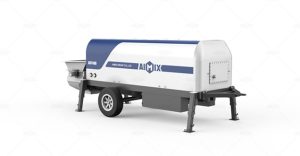
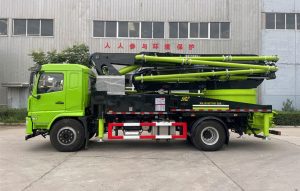
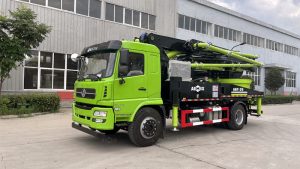
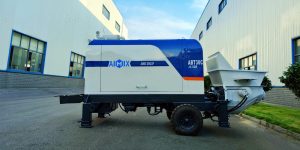
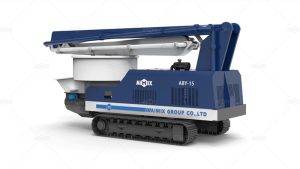
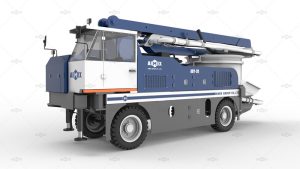
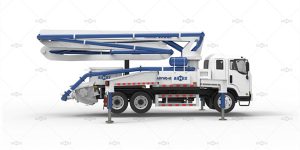
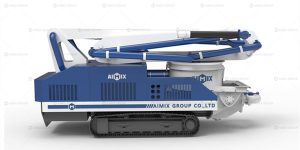
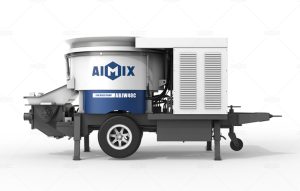
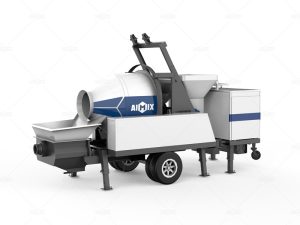
In the construction industry, tow behind concrete pumps have become one of the most versatile and practical tools for medium to large-scale concrete placement tasks. These pumps can be easily transported using vehicles, making them ideal for contractors who frequently move between job sites. They are widely used for residential foundations, road repair projects, bridge construction, and commercial building works. However, when contractors or companies plan to buy one, they quickly realize that the concrete pump price varies significantly depending on several technical, operational, and economic factors. Understanding these influencing factors is essential to making a smart purchasing decision and ensuring a good return on investment.
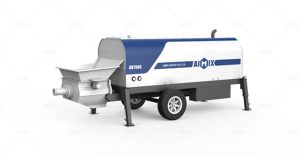
Pump Capacity and Output Rate
One of the most important factors that influence the tow behind concrete pumps price is the machine’s output rate, which is usually measured in cubic meters per hour. Higher-capacity models can pump concrete at a faster rate, making them more suitable for large-scale projects. These high-output models are typically built with stronger motors, larger hydraulic systems, and more durable materials, all of which contribute to higher production and purchase costs. On the other hand, smaller models designed for residential or small commercial projects usually have lower output rates and simpler systems, which helps reduce the overall concrete pump price. Buyers must match the output rate to their specific project requirements to avoid overspending on capacity that may not be fully utilized.
Engine Type and Power Source
The power source plays a major role in determining both the initial cost and long-term operational expenses of tow behind concrete pumps. Generally, buyers can choose between diesel-powered and electric-powered models. Diesel pumps tend to be more expensive upfront due to the higher cost of their engines and emission control systems. However, they are also more suitable for remote sites without reliable electricity access. Electric-powered pumps, on the other hand, usually come at a lower initial concrete pump price and offer cheaper long-term operation because they consume less energy and require less maintenance. However, their use is limited to areas where stable power supply is available. The choice between these two types should be based on the intended work environment and operational needs.
Material Quality and Build Design
The overall build quality and materials used in the manufacturing process have a direct impact on the price of tow behind concrete pumps. High-end models often use hardened steel for the pumping cylinders, advanced hydraulic components, and anti-corrosion coatings to extend lifespan and improve performance in harsh environments. Cheaper models might use standard materials that reduce the upfront cost but increase wear and tear over time. Investing in a high-quality model may seem expensive initially, but it ensures better reliability, lower maintenance costs, and higher resale value, making it more cost-effective in the long run. Therefore, the concrete pump price is often a reflection of the craftsmanship and durability of the equipment.
Brand Reputation and After-Sales Support
Another key factor influencing tow behind concrete pumps price is the reputation of the manufacturer or brand. Well-established brands usually charge more for their products, but they also provide superior performance, better warranty terms, and more comprehensive after-sales services such as spare parts availability and technical support. These elements significantly enhance the overall value and reliability of the investment. Lesser-known brands might offer a lower concrete pump price, but they can sometimes compromise on product consistency, service accessibility, or spare part availability. For contractors working on time-sensitive projects, choosing a reliable supplier with proven customer support is often worth the additional cost.
Hydraulic System and Pressure Performance
The performance of the hydraulic system is another essential factor determining the price of tow behind concrete pumps. Pumps with more advanced hydraulic systems are capable of handling higher pumping pressures, allowing them to deliver concrete efficiently over longer distances or to higher elevations. This makes them suitable for large construction sites or projects involving high-rise buildings. However, such advanced systems increase both the manufacturing complexity and maintenance requirements, which raises the concrete pump price. On the contrary, simpler systems designed for short-distance pumping are more affordable and easier to maintain, though they have limitations in power and reach.
Technology and Control Features
Modern tow behind concrete pumps come equipped with advanced control technologies such as remote control operation, automated lubrication systems, and electronic flow monitoring. These features improve operational convenience, reduce labor requirements, and minimize the risk of blockages or mechanical errors. While these enhancements raise the concrete pump price, they also contribute to better efficiency and safety, which can save money in the long term. Contractors should carefully assess whether such features are necessary for their projects. For small contractors or entry-level users, a standard control system might be sufficient, whereas larger projects might benefit from the productivity gains provided by automation.
Transportation and Import Costs
Since tow behind concrete pumps are often imported from international manufacturers, transportation, customs duties, and taxes can significantly influence their final selling price. The concrete pump price can rise due to shipping distance, fuel prices, and container availability. Moreover, fluctuations in exchange rates between the buyer’s local currency and the manufacturer’s currency can also cause price differences over time. To minimize these costs, some buyers prefer sourcing pumps from local or regional suppliers who can offer competitive logistics rates and faster delivery times. However, local options might have limited models or fewer customization features compared to international brands.
Maintenance and Spare Parts Availability
A critical yet often overlooked factor that affects the tow behind concrete pumps price is the availability and cost of spare parts. Pumps with widely available parts are generally cheaper to maintain and repair, reducing the total ownership cost. Manufacturers that design modular components or standardized fittings can make it easier for buyers to source replacements. However, specialized or proprietary systems often result in higher concrete pump price because users must purchase original parts directly from the manufacturer. Therefore, before purchasing, it is essential to consider not only the upfront cost but also the long-term expenses associated with upkeep and part replacement.
Demand and Market Conditions
Lastly, market demand and economic conditions also influence the tow behind concrete pumps price. During peak construction seasons or infrastructure expansion phases, demand for concrete pumping equipment rises sharply, leading to higher prices. Conversely, during economic slowdowns or off-seasons, manufacturers and dealers may offer discounts or promotional prices to attract buyers. Global factors such as raw material shortages, inflation, or supply chain disruptions can further impact production costs, ultimately affecting the retail concrete pump price. Buyers who monitor market trends closely can take advantage of favorable conditions to secure better deals.
Conclusion
In summary, the tow behind concrete pumps price is determined by a complex combination of factors, including capacity, power source, build quality, hydraulic performance, brand reputation, technology level, logistics costs, and market dynamics. Each of these factors contributes differently to the overall cost and long-term value of the equipment. Buyers should not focus solely on the initial concrete pump price, but rather evaluate total ownership cost, including fuel efficiency, maintenance, and operational reliability. By balancing these aspects and choosing a model that aligns with specific project requirements, contractors can ensure that their investment in a tow behind concrete pump delivers the best possible performance, durability, and financial efficiency over its lifespan.